Flu vaccine
Free on the NHS for everyone aged 65 or over (including those turning 65 by 31 March 2027), adults with certain long term conditions and unpaid care givers. Last date: 31 March 2027. Read about the NHS flu vaccine

Guide: staying well
Cold weather puts extra strain on the heart, lungs and circulation, and the risks rise in later life. On the East Kent coast, a damp wind off the Channel can make a mild day feel bitter. This guide brings together NHS and UKHSA advice with local help, for you or for a parent you look out for.
Last updated 23 October 2026
Care Quality Commission
Rated Outstanding by the CQC
The independent regulator of health and social care in England
Rated Outstanding by the Care Quality Commission
Report published 10 September 2019
Report published 10 September 2019. In July 2023 CQC reviewed the information it holds about us and found no need to reassess our rating.
Read our CQC report (opens the CQC website)Awards
Recognised regionally
homecare.co.uk Top Home Care Providers, South East England
Quick answer
Heat the rooms you use most to at least 18°C, wear several thin layers and have hot meals and drinks through the day. Get your free flu vaccine and, if eligible, your COVID-19 vaccine. Take extra care on icy paths, stay in regular contact with others and check what help with heating bills you can claim.
The NHS and the UK Health Security Agency both advise heating the rooms you spend most time in, such as the living room and bedroom, to at least 18°C if you can. This matters even more with a long term health condition, as keeping warm helps protect against flu, heart attacks and strokes.
Winter viruses spread easily and can hit harder in later life.
Free on the NHS for everyone aged 65 or over (including those turning 65 by 31 March 2027), adults with certain long term conditions and unpaid care givers. Last date: 31 March 2027. Read about the NHS flu vaccine
Offered to people aged 75 or over, residents of care homes for older adults and anyone with a weakened immune system. Last date: 31 January 2027. Read about the NHS COVID-19 vaccine
Book online, in the NHS App, at a pharmacy or through your GP surgery. You do not need to wait for an invitation. Ask your GP surgery whether you are also due the pneumococcal or RSV vaccine.
Icy pavements, wet leaves and dark mornings all make a fall more likely.
If someone has fallen and may have hurt their head, neck, back or hip, or cannot get up, call 999. Keep them warm and do not try to lift them yourself. Read NHS advice on falls
Food gives your body the energy it needs to stay warm. Aim for at least one hot meal a day, with hot drinks in between. Keep a few days of supplies in, such as tins, porridge, frozen vegetables and long life milk, so a cold snap does not leave you short. Keep sipping drinks through the day too.
Short days and bad weather can mean going days without a proper conversation. Agree a regular call with family, a friend or a neighbour. If you look out for someone, UKHSA suggests asking whether they feel unwell or need practical help.
Families can register for free UKHSA Cold-Health Alerts by email. The main alert season runs from 1 November to 31 March, and an alert is a good prompt to check in more often.
Several schemes help with winter heating costs. Some are paid automatically, others depend on your income or benefits. Pension Credit is a good first check, as it can unlock Cold Weather Payments and the Warm Home Discount.
£100 to £300 for winter 2026 to 2027 if you were born on or before 27 June 1960 and meet the other conditions. If your total income is over £35,000, HMRC takes it back.
£25 for each 7 day spell when the average temperature in your area is recorded or forecast at 0°C or below, between 1 November 2026 and 31 March 2027.
a one-off £150 off your electricity bill, usually paid automatically if you qualify.
extra money if you are over State Pension age and on a low income.
free extra help from your energy supplier if you are of State Pension age or have a long term condition.
the Kent County Council Crisis and Resilience Fund supports low income households who rely on heating oil and face an immediate heating crisis.
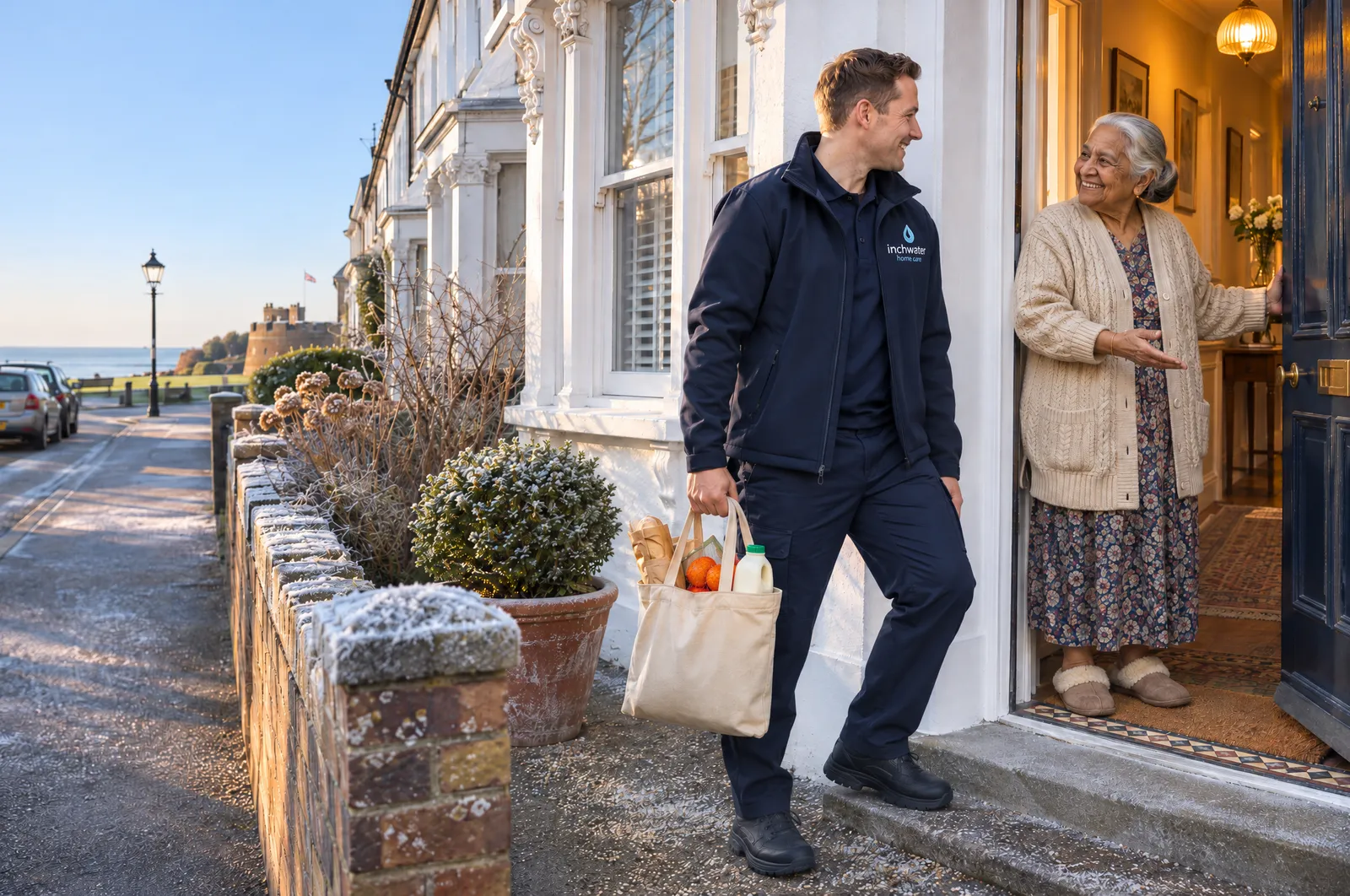
A regular visit means someone checks that all is well on the coldest days. Care givers can make sure the heating is on, prepare a hot meal and a flask of tea, collect shopping and prescriptions when paths are icy and support safe moving around the home. Just as important, they notice small changes, such as a new cough, more confusion or a missed meal, and pass them on so family and the GP can act early.
free information, lunch clubs and hot meal delivery in Sandwich, Deal, Dover and Folkestone. Call 01304 372608.
free on 0800 678 1602, 8am to 7pm, 365 days a year.
for urgent medical advice. In an emergency, call 999.
The NHS and UKHSA advise heating the rooms you use most, usually the living room and bedroom, to at least 18°C if you can. This is especially important for anyone aged 65 or over or living with a long term health condition. A simple room thermometer makes it easy to check.
No. For winter 2026 to 2027, the last date to have the free NHS flu vaccine is 31 March 2027. It is still best to book as early as you can, so you are protected for more of the winter.
No. If you are eligible, it is paid automatically when the average temperature in your area is recorded or forecast at 0°C or below for 7 days in a row, between 1 November 2026 and 31 March 2027.
Inchwater Home Care, rated Outstanding by CQC (report published 10 September 2019), supports people across Dover, Deal, Sandwich, Folkestone and Hythe with warm meals, company and a regular check in.