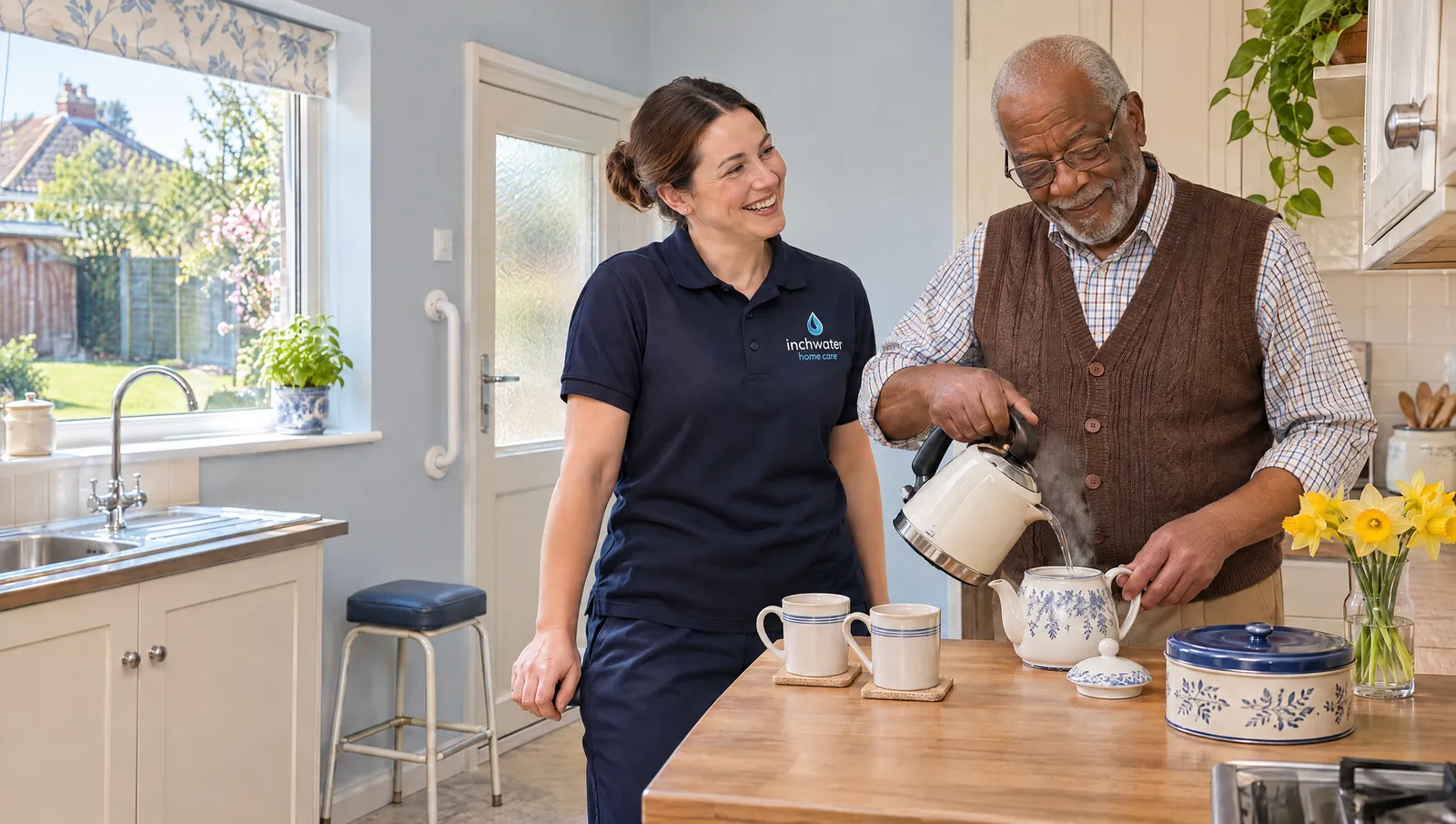
Personal care, done your way
Washing, dressing, toileting, skin care and help at mealtimes, carried out patiently and in the order you prefer. Care givers support you to keep doing what you can, for as long as you want to.

Motor neurone disease support
Living with motor neurone disease means planning for change while still living fully today. Inchwater Home Care supports people with MND and their families across Dover, Deal, Sandwich, Folkestone and Hythe, working alongside your specialist team so you can stay at home and stay in charge of the decisions that matter to you.
Care Quality Commission
Rated Outstanding by the CQC
The independent regulator of health and social care in England
Rated Outstanding by the Care Quality Commission
Report published 10 September 2019
Report published 10 September 2019. In July 2023 CQC reviewed the information it holds about us and found no need to reassess our rating.
Read our CQC report (opens the CQC website)Awards
Recognised regionally
homecare.co.uk Top Home Care Providers, South East England
Quick answer
Yes. Many people with MND choose to stay at home, with care that grows as their needs change. Inchwater Home Care plans support with you, your family and your MND specialist team. We help with personal care and daily routines and review your plan whenever something shifts, so help is ready before it becomes urgent.
Every plan starts with a free assessment at home. We listen to what a good day looks like for you and what worries you about the months ahead.
MND damages the nerves that carry messages from the brain to the muscles, so muscles gradually weaken. The MND Association explains that it can affect how a person walks, talks, eats, drinks and breathes. Symptoms progress at different speeds and in a different order for each person, and some people notice changes in thinking or behaviour.
In everyday terms, buttons and cutlery may become fiddly, getting out of a chair may take more effort, or talking may leave you tired. Each change can bring a new decision. A care team that already knows your routines makes those decisions feel less sudden.
Because MND is progressive, we talk early and honestly about the support you may need later. You set the pace of those conversations.
We learn your routines, your preferences and the things you want to keep doing yourself. Visits can start small, from 30 minutes.
We add visits, adapt routines and update your care plan when your occupational therapist or specialist team introduces new equipment.
We record your wishes for the future and work alongside your GP, community nurses and palliative care team so support is in place when you need it.
Washing, dressing, toileting, skin care and help at mealtimes, carried out patiently and in the order you prefer. Care givers support you to keep doing what you can, for as long as you want to.
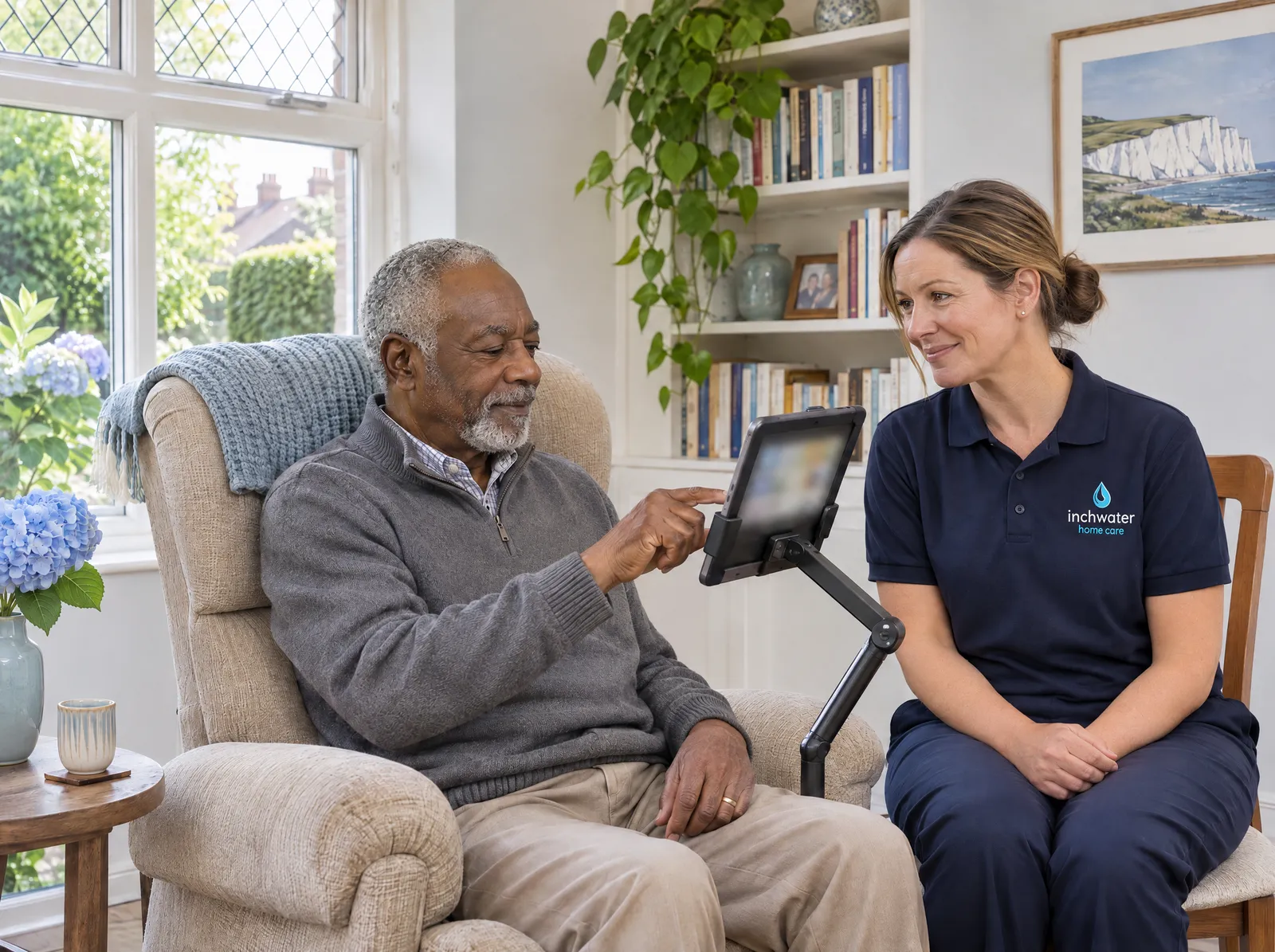
If speech becomes harder, care givers learn how you communicate, whether by tablet, voice banking, letter board or simple signals. They give you time and never finish your sentences unless you ask them to.
Your occupational therapist or specialist team may provide hoists, riser recliners or specialist beds. Care givers use equipment only in line with your care plan and their training.
MND affects everyone close to you. Familiar care givers bring rhythm to the week, and our office team is there for partners and adult children who need to talk things through.
When you are ready, we help you record your wishes and support them alongside your GP and palliative care team.
In East Kent, the specialist MND service at the Tower Neuro Rehab Unit, Kent and Canterbury Hospital, brings together an MND nurse, a neurologist, therapists, a dietitian and communication aids specialists. With your consent, we share what care givers notice so your team can respond early.
Relatives can read visit notes in our family app, which helps when several people share the caring. For information and emotional support, the MND Connect helpline is free on 0808 802 6262, Monday to Friday, 9am to 4pm. Unpaid family care givers can also request a carer's assessment from Kent County Council.
We review your care plan regularly and whenever something changes, not only on a set date. Support can grow from a single morning visit to several calls a day, with overnight help when nights become harder. As needs increase, some people become eligible for NHS Continuing Healthcare, and we can talk you through what that means.
We review care as soon as needs change and will tell you honestly what we can arrange and when. Planning ahead with you and your MND team makes it easier to add visits smoothly, so changes feel steady rather than rushed.
These are specialist tasks. Whether care givers can support them depends on their training, your care plan and agreement with your clinical team. Please ask us at your assessment.
We plan for it. We ask you, your family and your speech and language therapist how you communicate, then write it into your care plan so every care giver who visits knows how to understand you and how much time to allow.
Before visiting, care givers are introduced to your care plan, routines and preferences. Details of any MND specific training will be confirmed here.
Yes. Partners carry a great deal with MND. Regular visits, respite care and an office team who knows you can ease the load. Your partner may also be entitled to a carer's assessment from Kent County Council.
Many people with MND wish to, and we will support that choice alongside your GP, community nurses and palliative care team. We talk about your wishes early, record them in your care plan and adjust support as needs change.
Tell us a little about what would help and we will call you to arrange a free care assessment.
Sent securely to our care team
A free assessment at home is a calm first conversation, with no obligation and no pressure to decide on the day.