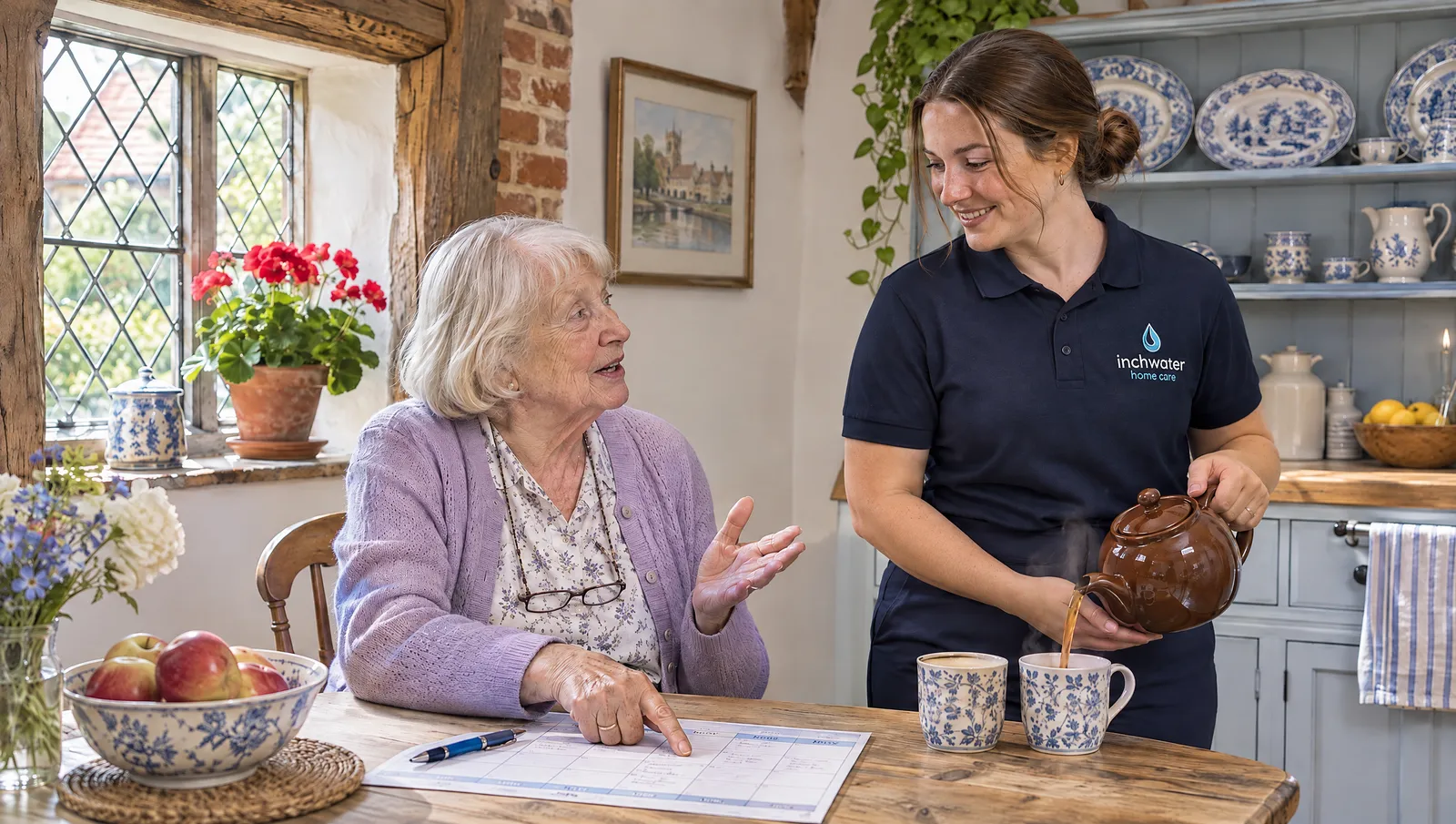
Personal care
washing, dressing, toileting and continence care, at the pace you set.

Live-in care in Dover, Deal and Folkestone
With live-in care, a trained Inchwater care giver lives in your home and supports you through the day, so you can stay where you feel most comfortable. We arrange live-in care across Dover, Deal, Sandwich, Folkestone and Hythe, planned around your routine and the people who matter to you.
Care Quality Commission
Rated Outstanding by the CQC
The independent regulator of health and social care in England
Rated Outstanding by the Care Quality Commission
Report published 10 September 2019
Report published 10 September 2019. In July 2023 CQC reviewed the information it holds about us and found no need to reassess our rating.
Read our CQC report (opens the CQC website)Awards
Recognised regionally
homecare.co.uk Top Home Care Providers, South East England
Quick answer
Live-in care means a care giver lives with you in your own home, usually staying for a set period before handing over to a colleague you also know. They help with personal care, meals, medication support, the house and company, and they are there if you need help at night. It is an alternative to moving into a care home.
Because one person is with you, care follows your day rather than a visit timetable. You keep your own routine, your own bed, your neighbours and, for many people, your pet.
washing, dressing, toileting and continence care, at the pace you set.
support with medicines as set out in your care plan.
cooking the food you enjoy and keeping an eye on how much you eat and drink.
cleaning, laundry, changing beds, shopping and prescriptions.
conversation, hobbies, walks, outings and getting to appointments.
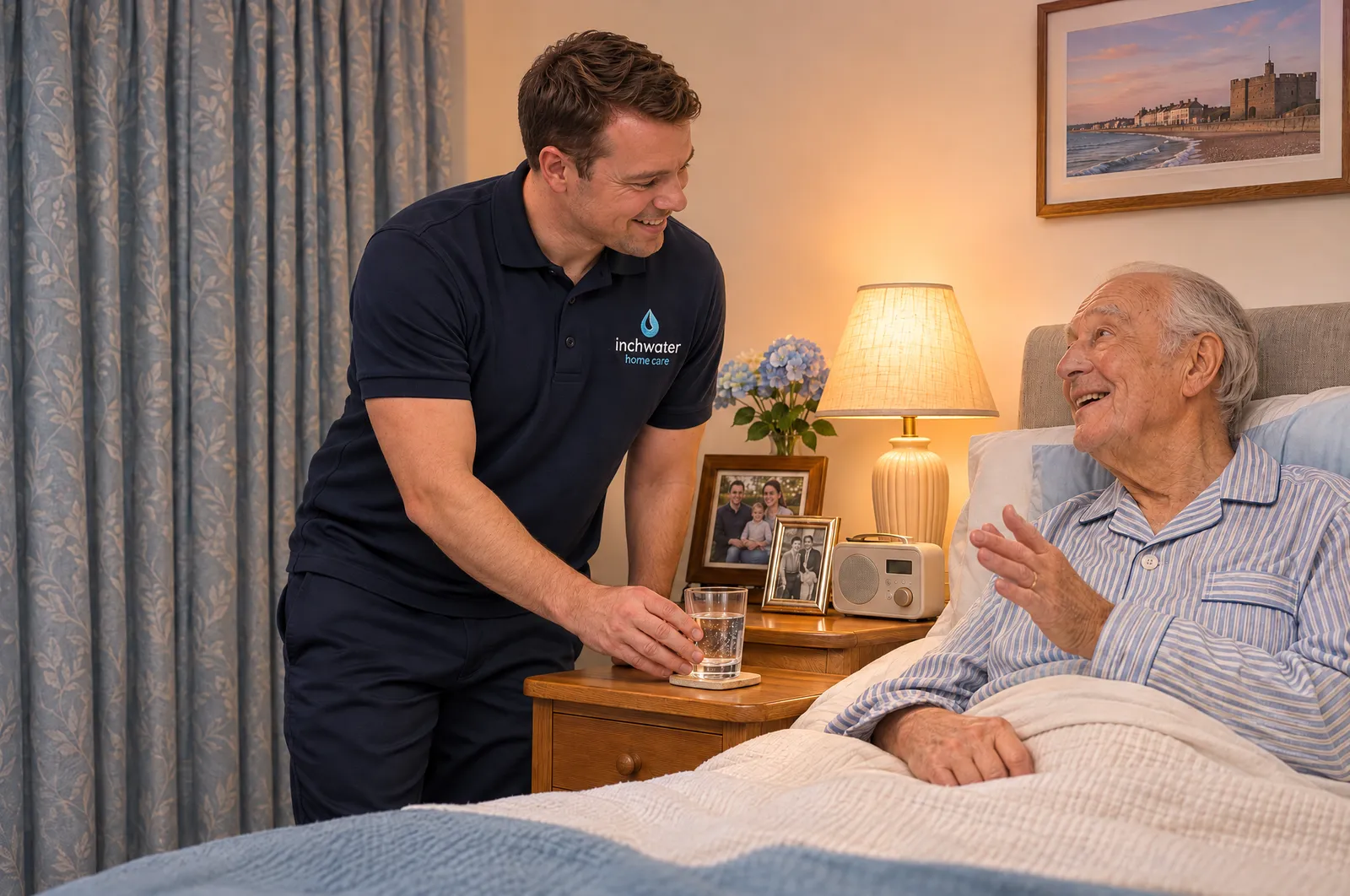
someone in the house if you need help or reassurance.
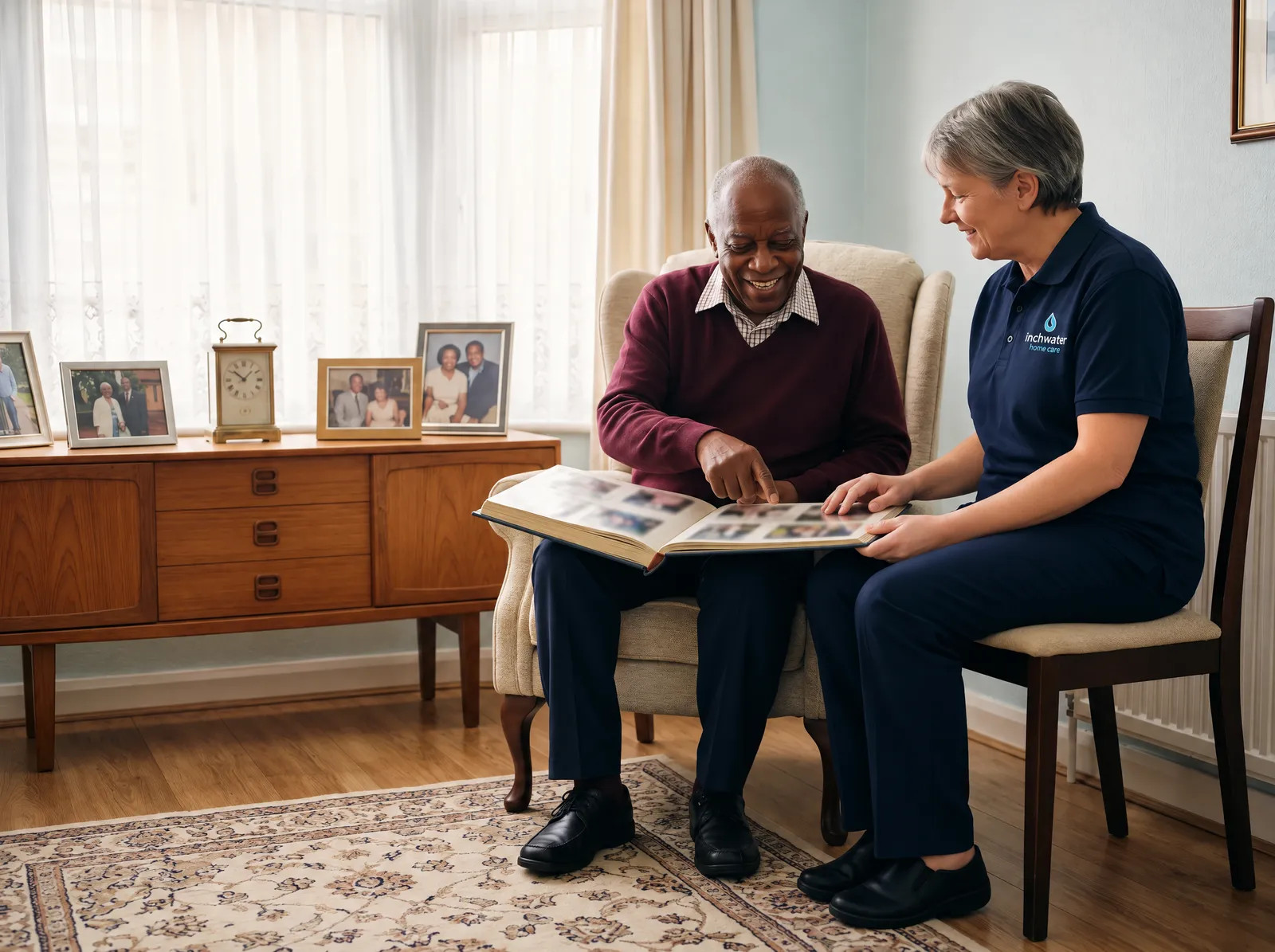
Familiar surroundings and one consistent person can help days feel calmer and safer. Read about dementia care
Support around the clock in the first weeks home, reducing as strength returns. Read about care after hospital
One care giver can support both of you, so neither has to move.
Calm, constant support for the person and their family, alongside the GP and district nurses. Read about end of life care
If several visits a day still leave long gaps, live-in care can fill them with one familiar face.
| Item | Live-in care | Visiting care | Care home |
|---|---|---|---|
| Where you live | Live-in care:Your own home | Visiting care:Your own home | Care home:A care home |
| Who is with you | Live-in care:One care giver who lives with you | Visiting care:Care givers at agreed visit times | Care home:Staff shared with other residents |
| Help at night | Live-in care:Someone in the house | Visiting care:Only with overnight care | Care home:Staff on duty |
| Your routine | Live-in care:Yours, day and night | Visiting care:Planned around visits | Care home:Shaped by the home |
| Pets and garden | Live-in care:Usually stay with you | Visiting care:Stay with you | Care home:Often not possible |
Not sure which is right? We will talk it through honestly at your free assessment.
Call the office for your area and tell us what is happening now.
A care manager meets you and your family to understand your needs, routines and home.
We look for a care giver whose experience and interests suit you.
Your care giver moves in on the agreed date, and the office stays in touch through the first days.
We check how things are going and change the plan as your needs change.
A live-in care giver needs their own bedroom and somewhere to keep their things. They also need time for a break each day and for proper sleep at night, so they can care for you well. We will talk through practical details, such as meals and internet access, at your assessment.
If you need help several times most nights, a live-in care giver alone may not be enough. We can add overnight care with a waking night care giver, so everyone gets the rest they need.
Many people pay for live-in care themselves. Some receive help from Kent County Council, often as Direct Payments, and people with a primary health need may be eligible for NHS Continuing Healthcare. After your free assessment we give you a clear, written quote. Read about fees and funding
Dover, Deal and Sandwich
01304 241684Including Walmer, Kingsdown, St Margaret's at Cliffe, Capel-le-Ferne, Eastry, Ash, Wingham, Aylesham, Eythorne, Shepherdswell and Adisham.
No. A live-in care giver supports you through the day, takes a daily break and sleeps at night, though they are there if you need help. If you need regular help at night, we can add a waking night care giver.
We aim to keep a small team of care givers who take turns living with you, so you always know the person in your home. We introduce them before they start where we can. We cannot promise named care givers.
Yes. Your care giver needs a private bedroom with a bed and space for their belongings. If that is difficult, talk to us, as visiting and overnight care may work instead.
It depends on your needs and on finding the right care giver. We will give you an honest view at your free assessment. If we cannot help at that time, we will tell you.
Yes. Some people use live-in care for a few weeks, for example after a hospital stay or while a family care giver is away.
Yes. Inchwater Home Care is registered with the Care Quality Commission for personal care and is rated Outstanding overall, report published 10 September 2019.
Tell us a little about what would help and we will call you to arrange a free care assessment.
Sent securely to our care team
Tell us what is happening now, and we will explain honestly how live-in care could work for you.