Dementia and Alzheimer's
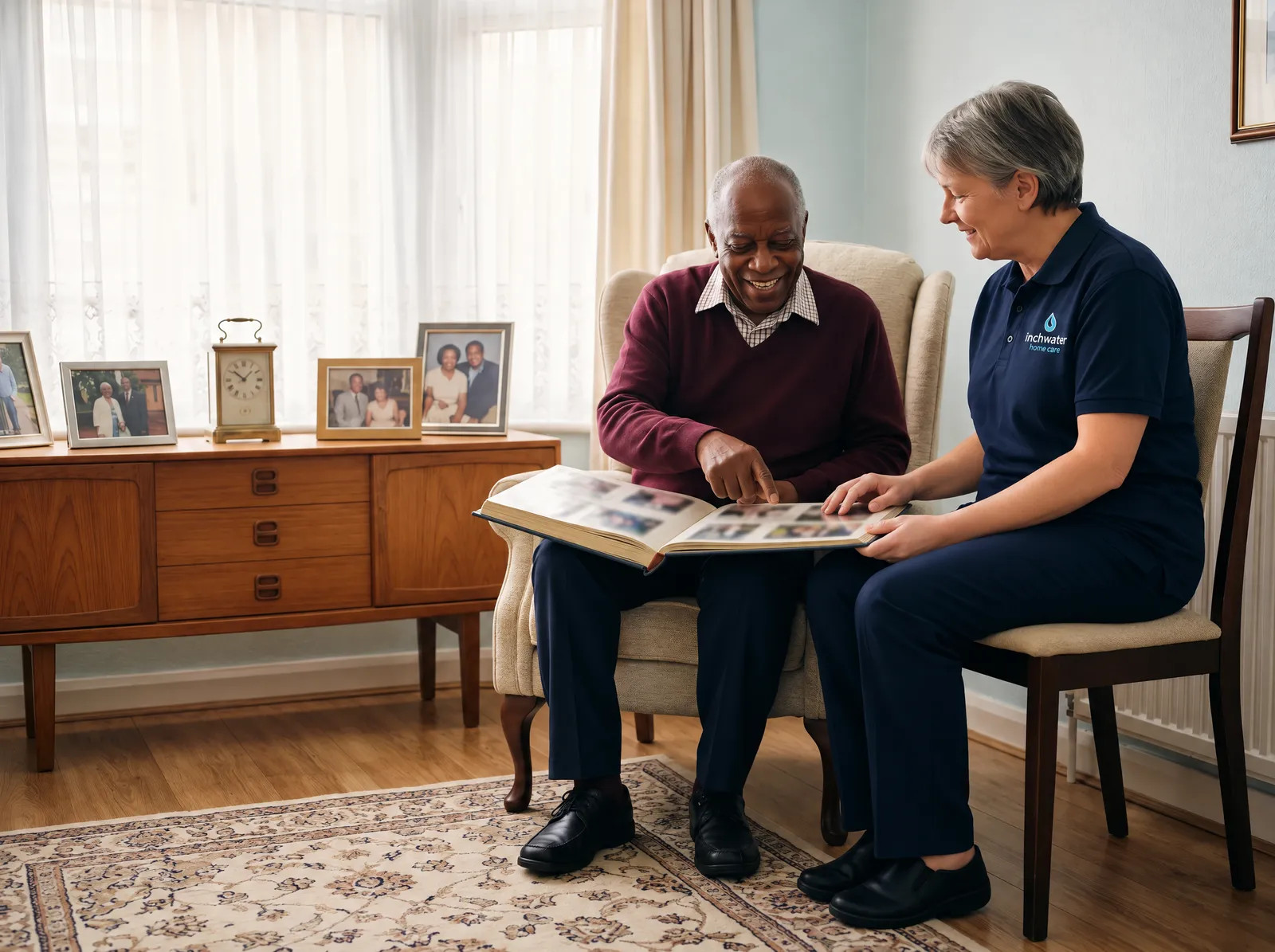
Calm routines and a consistent small team of care givers help days feel settled. We support meals, personal care and meaningful activity. We also keep the family informed through visit notes.

Conditions we support
Living with dementia, Parkinson's, the effects of a stroke or motor neurone disease changes how each day feels. Our care givers help you keep the routines, the home and the people that matter, with visits planned around how the condition affects you. We support families across Dover, Deal, Sandwich, Folkestone, Hythe and the villages around them.
Care Quality Commission
Rated Outstanding by the CQC
The independent regulator of health and social care in England
Rated Outstanding by the Care Quality Commission
Report published 10 September 2019
Report published 10 September 2019. In July 2023 CQC reviewed the information it holds about us and found no need to reassess our rating.
Read our CQC report (opens the CQC website)Awards
Recognised regionally
homecare.co.uk Top Home Care Providers, South East England
Quick answer
Yes. Home care can help someone living with a long term condition stay safely in familiar surroundings. Inchwater Home Care plans each visit around how the condition affects the person day to day, works with GPs, nurses and therapists with your consent and reviews the care plan as needs change, from a few visits a week to several a day.
Care starts with a free assessment at home. A care manager from our Whitfield, Dover office asks what a good day looks like, which tasks have become harder and what matters most to you and your family. The care plan comes from that conversation, not from the diagnosis alone.
A long term condition affects the whole family. If you look after someone, you can ask Kent County Council for a carer's assessment. The NHS social care and support guide explains the wider help available, including needs assessments.
Each condition has its own page explaining how care can help, what to expect and how support changes over time.
Calm routines and a consistent small team of care givers help days feel settled. We support meals, personal care and meaningful activity. We also keep the family informed through visit notes.

Symptoms can vary through the day, so visits are planned around when you move best. Support can include medication reminders at the times in your plan, dressing at your own pace and staying active.

Coming home after a stroke can feel daunting. Care givers help with daily tasks, encourage the exercises your therapists have set and support you to rebuild confidence one step at a time.

Needs can change quickly with MND. We plan ahead with you, your family and your specialist team, so care can adapt to your wishes as things change.
Support often changes shape over time. Some people start with a few visits a week, then add respite care to give a family care giver a break, overnight care for settled nights or palliative and end of life care when that time comes.
We also support people living with the conditions below. They do not have separate pages, but the approach is the same: we get to know the person first, then build care around their routines, preferences and goals.
Talk to us. Tell us about the condition and what everyday life looks like now. We will tell you honestly whether our care is the right fit and, if it is not, we will try to point you towards someone who can.
A free assessment at home is the simplest way to see how care could fit around your life.