Coming home
- Checking the house is warm and the bed is made
- Placing everyday essentials within easy reach
- Light shopping and collecting prescriptions

Hospital discharge care in Dover, Deal and Folkestone
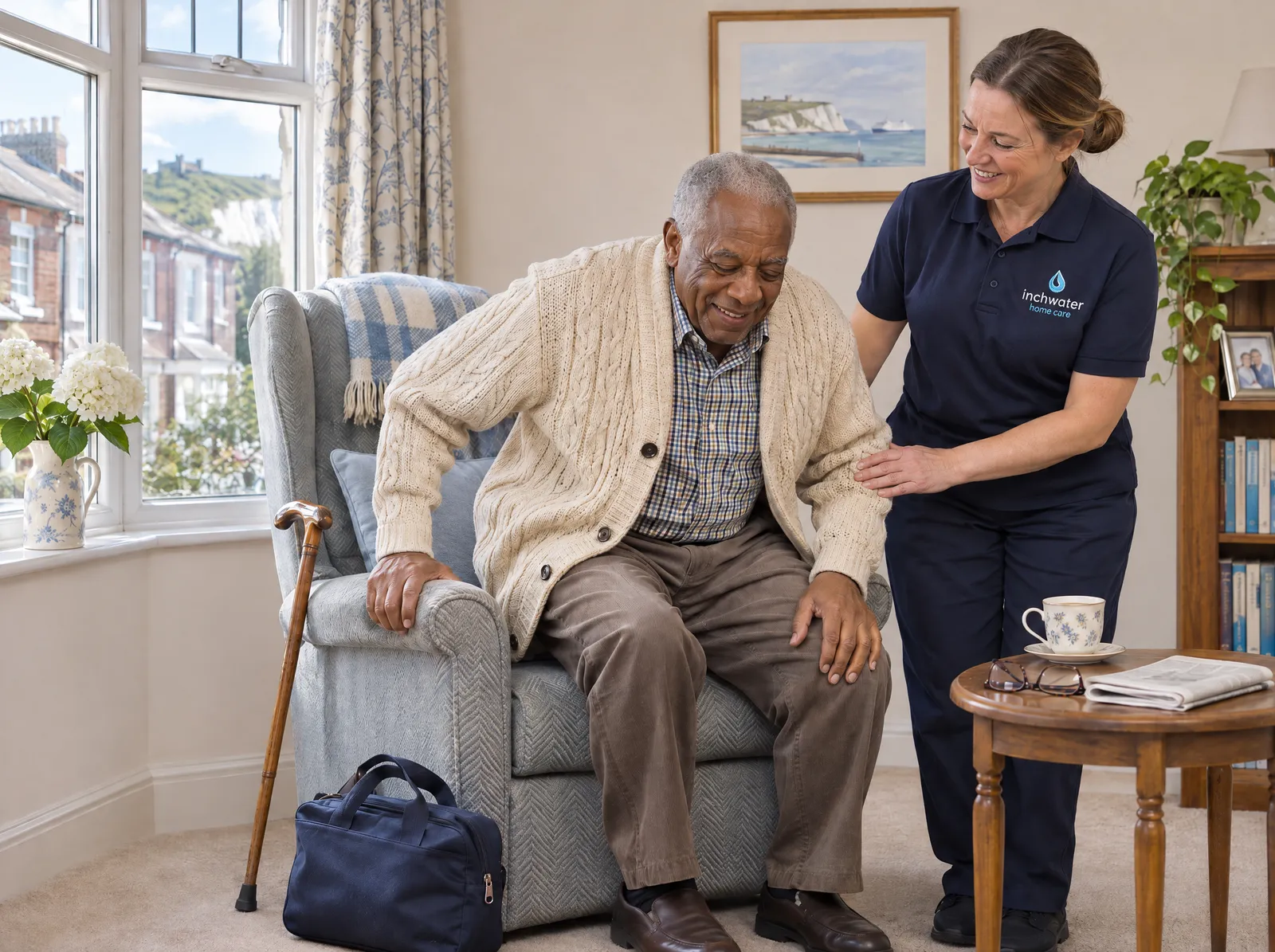
Leaving hospital is good news, yet the first days home can feel uncertain. Inchwater Home Care supports people across Dover, Deal, Sandwich, Folkestone and Hythe through that return: settling in, restarting daily routines and rebuilding the confidence to do more for yourself. We plan visits around you and, with your permission, the hospital discharge team.
Care Quality Commission
Rated Outstanding by the CQC
The independent regulator of health and social care in England
Rated Outstanding by the Care Quality Commission
Report published 10 September 2019
Report published 10 September 2019. In July 2023 CQC reviewed the information it holds about us and found no need to reassess our rating.
Read our CQC report (opens the CQC website)Awards
Recognised regionally
homecare.co.uk Top Home Care Providers, South East England
Quick answer
Hospital discharge care is support at home in the days and weeks after a hospital stay. A care giver visits to help with washing, dressing, meals, medicines and moving about safely while you recover. Visits follow a written care plan and are reviewed often, so support can reduce as strength returns or continue if you need it.
Whether you are coming home from William Harvey Hospital in Ashford, Kent and Canterbury Hospital, Queen Elizabeth the Queen Mother Hospital in Margate or the community hospitals in Dover and Folkestone, the first week back is when practical help matters most.
Call us as soon as a discharge date is being discussed. A care manager listens to what you need and, with your permission, speaks to the ward or discharge team.
Together we agree visit times, tasks, medicines and any advice from physiotherapists or occupational therapists. The first visit depends on care giver availability in your area, and we will always be honest about timing.
We aim to send a small, consistent team, so you are not explaining your routine to someone new each day.
Care givers record every visit in the Birdie app, so the relatives you choose can follow how things are going.
As you recover, we review the plan with you and reduce, pause or continue visits as you prefer.
In England, many people leave hospital under a "discharge to assess" approach. You go home once you no longer need hospital care. Any short term care or reablement comes first and longer term needs are assessed after you have had time to recover. Read the GOV.UK hospital discharge guidance
Kent County Council runs enablement services that help people relearn everyday tasks. They are free at the point of referral, and Kent Enablement at Home usually lasts around two weeks. Learn about enablement at home in Kent
Our care can sit alongside this support or follow on once it ends. The NHS notes that you are usually given about 7 days of medicines when you leave, so ask your GP for a repeat prescription early. Read NHS advice on leaving hospital
One family described how their father received care twice a day for three months after a fall, helping him stay at home for longer.
Some people need help for a few weeks. Others find that regular visits make life easier for longer. Because we already know your routine, it is simple to carry on with personal care at home, add home help or arrange overnight care for the first nights home. If the hospital stay followed a stroke, read about our stroke support at home.
Discharge coordinators, social workers and therapists can contact our Dover and Folkestone teams directly. Make a professional referral
Dover, Deal and Sandwich
01304 241684Including Walmer, Kingsdown, St Margaret's at Cliffe, Capel-le-Ferne, Eastry, Ash, Wingham, Aylesham, Eythorne, Shepherdswell and Adisham.
As early as you can, ideally once a discharge date is being discussed. Early contact gives us time to understand your needs, talk to the discharge team with your permission and plan visits.
We cannot promise a start time, because it depends on care giver availability in your area. We will tell you honestly what is possible and keep you updated.
It depends on your recovery. Some people need a few weeks of visits, while others choose to continue for longer. We review the plan regularly and adjust it with you.
Yes. Hospital stays often bring new or changed medicines. Care givers support you as set out in your care plan, and we contact your GP or pharmacist on your behalf if questions come up.
It depends on your situation. Some people receive short term support arranged by the NHS or Kent County Council. Others pay privately or use Direct Payments. We explain the options at your free assessment.
Yes, with your permission. We can share what support we can offer and follow any equipment or therapy advice, so your care at home picks up where the ward left off.
Tell us a little about what would help and we will call you to arrange a free care assessment.
Sent securely to our care team
Talk to us early and we will help you work out the support you need.