Inchwater Home Care home page

Parkinson's care at home

Parkinson's home care planned around your better hours

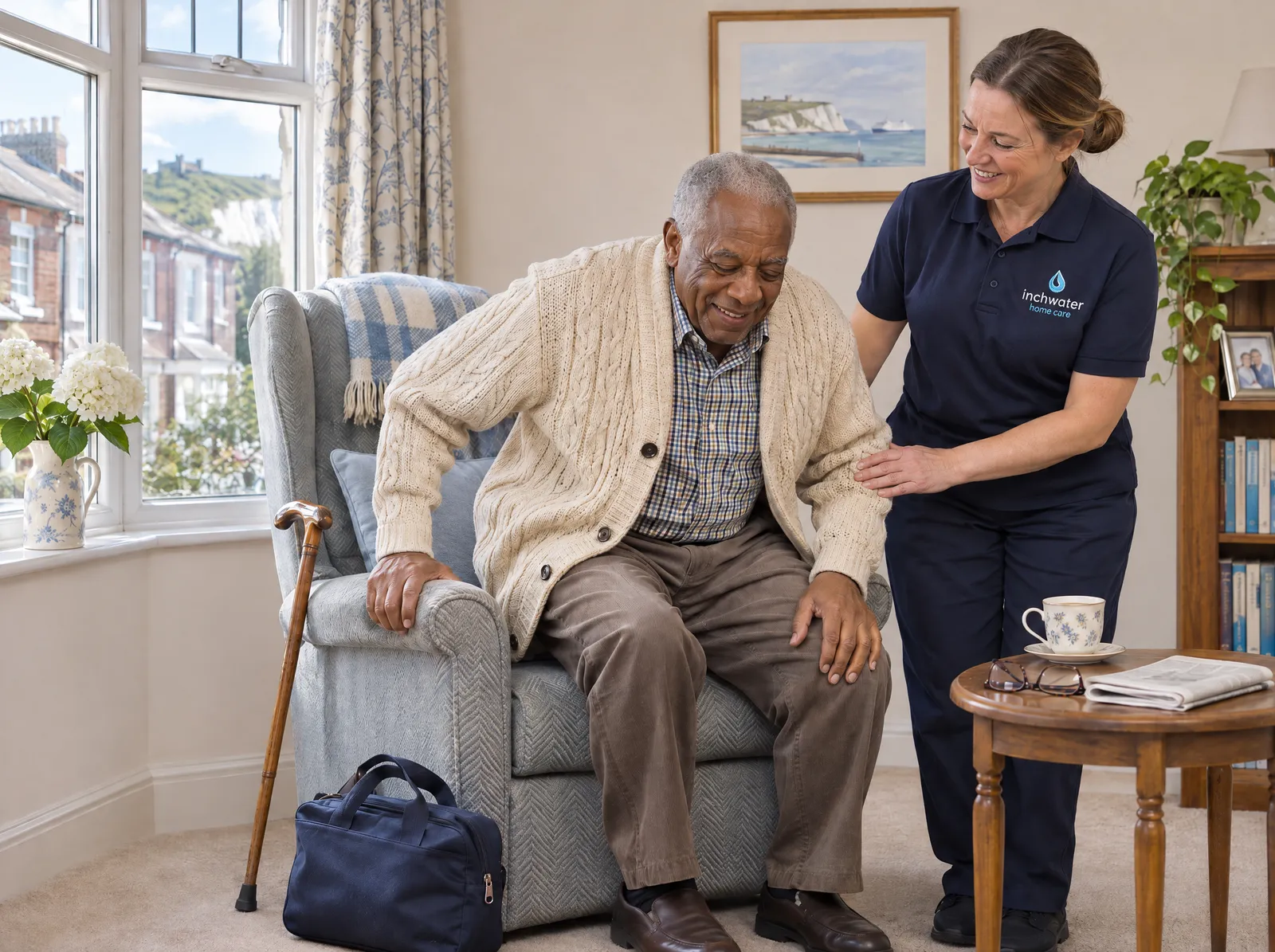
Parkinson's rarely keeps to a timetable, but medication does. We plan visits around your dose times and the parts of the day when you move most easily, help with the tasks that have become slower and encourage you to keep doing what you enjoy, at home in Dover, Deal, Sandwich, Folkestone, Hythe and nearby villages.

Care giver walking beside an older man with a walking stick in his Deal garden, Parkinson's care at home

Independent evidence you can check

Care Quality Commission

Rated Outstanding by the CQC

The independent regulator of health and social care in England

Rated Outstanding by the Care Quality Commission

Report published 10 September 2019

Report published 10 September 2019. In July 2023 CQC reviewed the information it holds about us and found no need to reassess our rating.

Read our CQC report (opens the CQC website)

Awards

Recognised regionally

homecare.co.uk Top Home Care Providers, South East England

  1. Top 10Home Care Providers, South East England2015
  2. Top 10Home Care Providers, South East England2017
  3. Top 20Home Care Providers, South East England2018

Quick answer

Can someone with Parkinson's be cared for at home?

Yes. With the right support, many people with Parkinson's live at home for years. Our care givers visit at agreed times to prompt medication, help with washing, dressing and meals and support safer movement around the house. We work alongside your GP, Parkinson's nurse and therapists, starting with as many or as few visits as you need.

Every package begins with a free assessment at home with a care manager from our Whitfield office. Visits start from 30 minutes.

How Parkinson's can affect daily life

The NHS lists three main physical symptoms: tremor, slowed movement and muscle stiffness. It also lists depression, anxiety, sleep problems and swallowing difficulties. Parkinson's UK says up to 2 in 3 people with the condition experience fatigue at some point.

Symptoms can shift from hour to hour. Buttons that feel easy after a morning dose can feel impossible as it wears off. So at your assessment we ask when your good and harder times usually fall, and plan around them.

How we support people living with Parkinson's

  • Moving safely

    Care givers never rush you. They keep walkways clear, encourage the aids your physiotherapist or occupational therapist recommends and give you time if you freeze. If they notice more stumbles, they tell you and, with your consent, your health team.

  • Eating, drinking and swallowing

    Meals are made the way you like them, with time to eat at your own pace. Where a speech and language therapist has advised on food textures or drinks, care givers follow that guidance and report any new difficulty.

  • Fatigue

    We schedule the more tiring tasks, such as a shower, for the time of day you feel strongest, and leave room to rest.

  • Mood

    Low mood and anxiety can be part of Parkinson's. A familiar care giver notices when you are not yourself, makes time to talk and, if you agree, passes concerns to your GP.

Working with families and health professionals

Parkinson's care often involves a GP, consultant, Parkinson's nurse, physiotherapist, occupational therapist and speech and language therapist. With your consent, we share what care givers notice day to day, such as changes in movement, sleep or appetite, so the people managing treatment see the full picture.

Families can read visit notes through our family app and call the office whenever something feels different. A partner who provides a lot of care can ask Kent County Council for a carer's assessment. For independent advice, the Parkinson's UK helpline is free on 0808 800 0303.


When needs change

Parkinson's progresses at a different pace for everyone. We review your care plan regularly and after any fall or hospital stay, then adjust visit times, length and tasks with you. Support might grow from one morning visit to help at several points in the day, with nights added only if sleep becomes disturbed.

Can care givers give medication at exactly the right minute?

We plan visits around the dose times in your care plan and prompt or support each dose. We cannot promise an exact minute for every visit, so at the assessment we talk honestly about timings and other options, such as reminder alarms.

Do your care givers have Parkinson's training?

Every care giver learns your routine and care plan before supporting you. Details of any Parkinson's specific training will be confirmed here.

What happens if my husband freezes or falls during a visit?

Care givers stay calm, give him time and follow the moving and handling guidance in his care plan. After a fall they do not lift without the right equipment, and they call for help where needed. We then tell you and review the plan.

Can you help with exercises from the physiotherapist?

Yes. Care givers can encourage and support exercises your physiotherapist has set, following their written guidance. They do not design exercise programmes themselves.

Can you give my wife a break from caring for me?

Yes. Regular visits or planned respite care give her time to rest, see friends or attend her own appointments, knowing you are with someone familiar.

Will we see the same care givers?

We aim to introduce a small, consistent team, so care givers learn how Parkinson's affects you and notice small changes. Rotas can change for holidays or sickness, and we let you know.

Ask about Parkinson's care at home

Tell us a little about what would help and we will call you to arrange a free care assessment.

Sent securely to our care team

Please do not include medical details here. We will talk these through with you in person.

This helps us connect you with the right local team.

Who is the care for? (required)
What support would help? Choose all that apply (optional)
When does support matter most? Choose all that apply (optional)
When would you like support to start? (required)
Best time to contact you (optional)

Plan care around the times that matter

Tell us about your dose times and your better hours, and we will build visits around them.