Around the house
- Light housekeeping: dusting, hoovering, wiping surfaces and washing up
- Laundry, ironing and putting clothes away
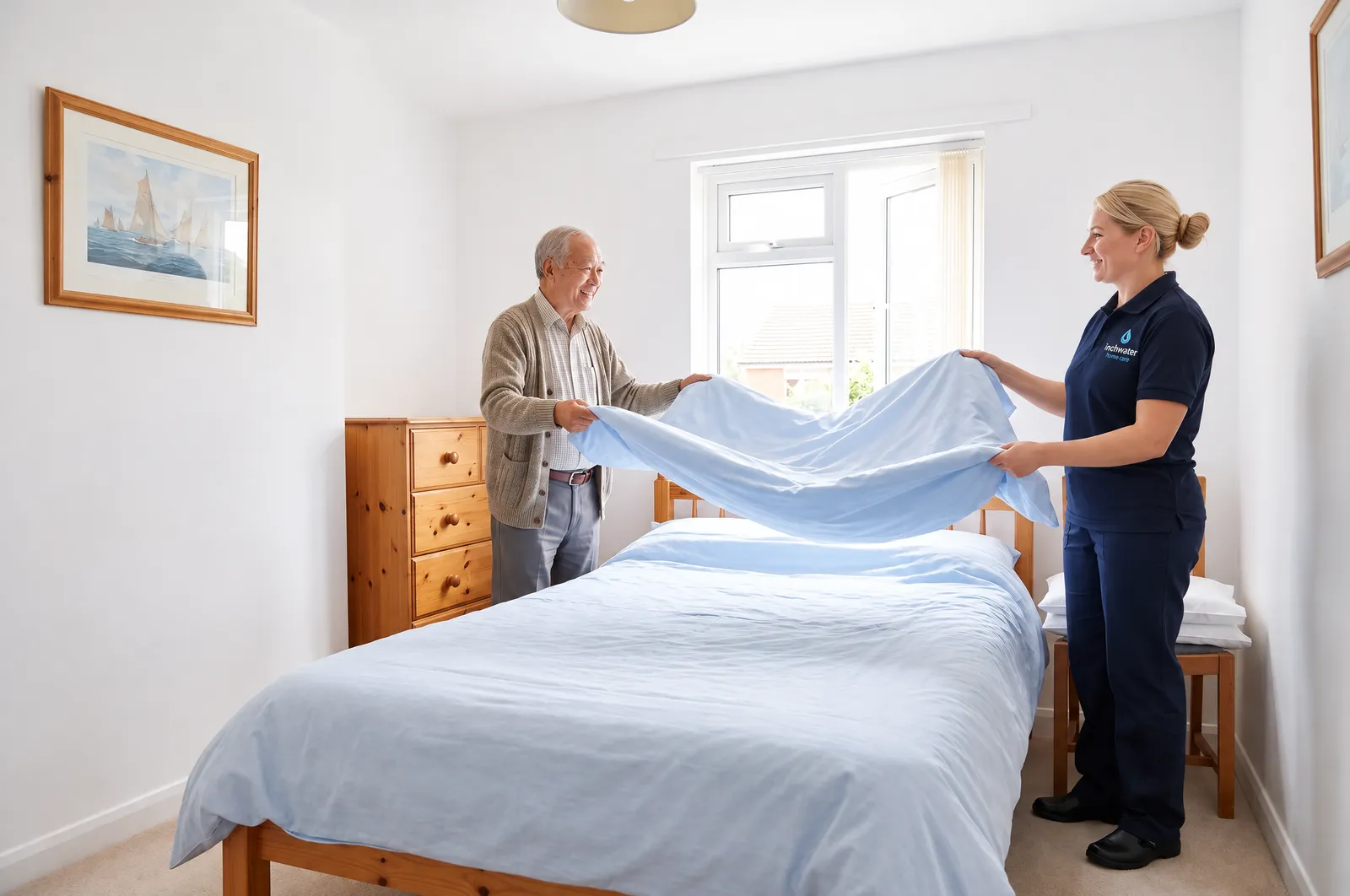
- Changing beds and freshening rooms

Home help in East Kent
The weekly shop, the bed linen and the ironing pile can become the hardest part of the week. Our care givers take on the jobs that tire you, alongside you and in your way, so your home stays comfortable and your energy goes on the things you enjoy. We visit across Dover, Deal, Sandwich, Folkestone and Hythe.
Care Quality Commission
Rated Outstanding by the CQC
The independent regulator of health and social care in England
Rated Outstanding by the Care Quality Commission
Report published 10 September 2019
Report published 10 September 2019. In July 2023 CQC reviewed the information it holds about us and found no need to reassess our rating.
Read our CQC report (opens the CQC website)Awards
Recognised regionally
homecare.co.uk Top Home Care Providers, South East England
Quick answer
Home help is practical support with running your home. A trained care giver visits at times you choose to help with light housekeeping, laundry, changing beds, meals, shopping, prescriptions and errands. You decide what matters most and how it is done. The aim is a safe, comfortable home and more of your energy left for living.
Because our home help comes from care workers rather than a cleaning firm, your care giver also notices how you are. If you seem unwell, are not eating or something in the house looks unsafe, they tell our office so we can act.
For many people, home help is the first support they ever have. Accepting help with the hoovering can feel easier than accepting help with a bath, and that is completely fine.
Starting early has real benefits. You get to know your care givers and our office team while life is going well. Your family gains the reassurance of a regular visit. If you need more later, such as personal care in the mornings, it is added to the plan you already have, usually with faces you already know.
The NHS notes that most councils do not provide home help, so it is often arranged privately. Our fees and funding guide explains the options.
A care manager visits to learn what you want help with, how you like things done and where everything lives.
We agree which jobs happen on which visit, from a weekly clean to a meal every day.
We aim to send the same small team, so you are not explaining your kitchen to a stranger each week.
Care givers record what they did. With your agreement, family can read the notes in the Birdie family app.
We check in and change visits as your needs grow or ease.
Every visit lasts at least 30 minutes. Any minimum number of visits each week is agreed at your assessment.
Home help sits comfortably beside other support. Add companionship and there is time for a chat or a short outing once the jobs are done. It is often part of respite care while a family care giver takes a break, and of hospital discharge care when the house needs to be ready for someone coming home. For people living with dementia, steady routines around meals and shopping help daily life feel familiar.
Home help is available across Dover, Deal, Sandwich, Folkestone and Hythe, plus nearby villages from Kingsdown and Eastry to Hawkinge and Sandgate. See all areas we cover
No. Our care givers do light housekeeping, but they are trained care workers who also prepare meals, collect prescriptions, notice changes in how you are and report concerns to our office. Heavier jobs, such as moving furniture, deep cleaning carpets or cleaning outside windows, are not usually part of home help.
Yes. You can write the list together and your care giver shops for you, or you can go together if you would like the outing. How shopping money is handled, recorded and receipted is agreed at your assessment, so everything stays clear for you and your family.
Yes, with everyday tasks agreed in your care plan, such as feeding a cat, refreshing water bowls, letting a dog into the garden or watering house plants. Tell us about any pets at your assessment so we can introduce care givers who are comfortable with animals.
Yes. Many people begin with help around the house and later add personal care, companionship or extra visits. Your care plan is updated rather than replaced, and wherever possible you keep the care givers you already know. We review your plan regularly, so changes can be talked through early.
Every visit lasts at least 30 minutes. Whether there is a minimum number of visits each week, and how visits can be paused or changed, is explained clearly at your free assessment before anything is agreed.
Sometimes. The NHS says most councils do not provide home help on its own. However, maintaining a habitable home is one of the outcomes councils consider in a care needs assessment, and eligible support can be funded through Direct Payments. We accept private, Direct Payments and council funded arrangements.
Tell us a little about what would help and we will call you to arrange a free care assessment.
Sent securely to our care team
Tell us which jobs would make the biggest difference and we will plan from there.