Comfort and personal care
- Gentle washing, mouth care and fresh clothes
- Changing position to stay comfortable, as the care plan sets out
- Keeping the room calm, fresh and peaceful

End of life care in East Kent
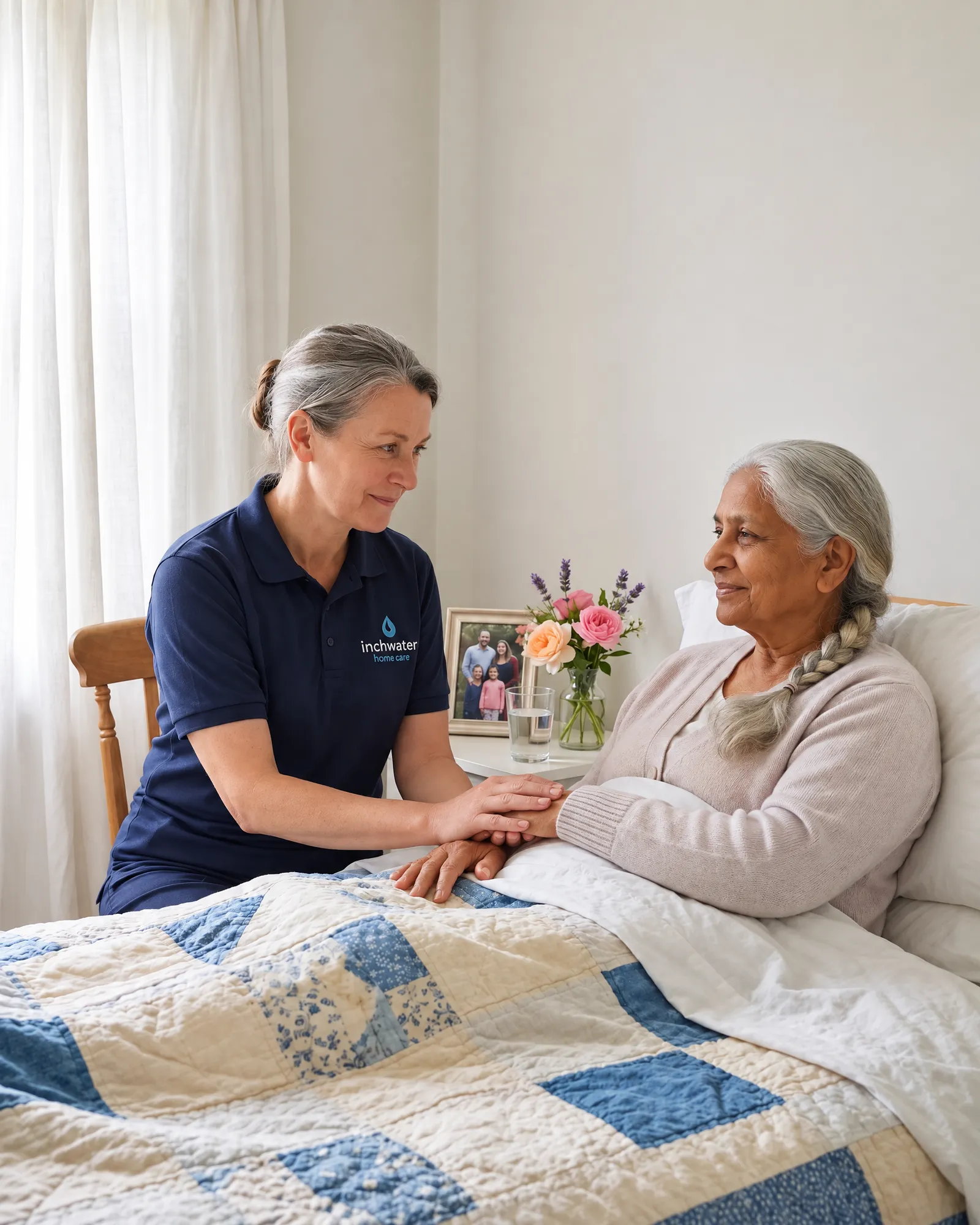
For many people, home is where they most want to be: their own bed, familiar sounds and the people they love close by. Our care givers across Dover, Deal, Sandwich, Folkestone and Hythe offer calm, unhurried support for your loved one, and for you, so time at home can be as comfortable as possible.
Care Quality Commission
Rated Outstanding by the CQC
The independent regulator of health and social care in England
Rated Outstanding by the Care Quality Commission
Report published 10 September 2019
Report published 10 September 2019. In July 2023 CQC reviewed the information it holds about us and found no need to reassess our rating.
Read our CQC report (opens the CQC website)Awards
Recognised regionally
homecare.co.uk Top Home Care Providers, South East England
Quick answer
Palliative care aims to keep someone with an illness that cannot be cured as comfortable as possible. End of life care is part of it, for the last months or years of life. At home, our care givers help with washing, comfort, food, drink and company, while the GP and community nurses lead medical care.
The NHS explains that good end of life care helps people live as well as possible until they die and to die with dignity. It should also support family and care givers. Read the NHS guide to end of life care
End of life care is for anyone who wants to stay at home as an illness progresses. That may be someone living with cancer, heart or lung disease, dementia, motor neurone disease or simply great age. Some people need a short visit each day. Others need several visits and help through the night.
A care manager visits to understand what matters to your loved one: where they want to be, who they want near and the small comforts that make a day easier.
Visits, tasks and wishes are agreed with your loved one and, if they choose, with you.
We aim to keep the team small so your loved one sees faces they know.
Needs can change quickly. We review the plan as often as needed and adjust visits with you.
When someone is cared for at home, the GP has overall responsibility for their care and community nurses usually visit. Our care givers give the everyday care in between, follow their guidance and tell them promptly if your loved one seems uncomfortable or something changes.
In East Kent, Pilgrims Hospices support people with incurable illness, including care at home and help for families. Your GP or nurse can explain how to be referred.
Care givers record each visit. With your loved one's agreement, family can read the notes in the Birdie app. See how family updates work
Caring for someone at the end of their life is tiring in every sense. Our care givers can take on the practical tasks so you have time simply to be together, and they will listen when you need to talk. Families often tell us that steady, kind support helped the whole family through.
Nights can bring the most worry. With overnight care, a waking care giver stays awake and close by, so you can rest knowing you will be woken if you are needed.
The first hours can feel disorientating. If a death at home was expected, the usual first step is to call the GP practice, and a doctor or nurse will come to verify the death. Our care givers can help you make those calls and will give you time and space. Nobody will rush you.
Age UK has a clear step by step guide to what to do when someone dies, including registering the death within five days.
End of life care often grows from support already in place, such as personal care or care after a hospital stay. Some people nearing the end of life qualify for fast track NHS Continuing Healthcare, arranged by the health professionals involved. Read about NHS Continuing Healthcare
We support families in Dover, Deal, Sandwich, Folkestone, Hythe and nearby villages. See all areas we cover
Yes. Many people choose to spend their last months, weeks or days at home. The GP and community nurses manage medical needs, and our care givers provide personal care, comfort and company in between visits. We plan the support around your loved one's wishes and review it as their needs change.
Our care givers support with medication as set out in the care plan. Medicines for pain and symptoms near the end of life are prescribed by the GP and are usually given or managed by community nurses. If your loved one seems uncomfortable, our care givers tell the nurses or the GP straight away.
Yes. We can talk with you about overnight care, often a waking night, so someone is awake and with your loved one through the night while family members rest.
We know time can feel short. Please call the office for your area as soon as you can. We will be honest about what we can arrange and when, because it depends on your loved one's needs and care giver availability nearby.
Some people nearing the end of life are eligible for fast track NHS Continuing Healthcare, which the health professionals involved in their care apply for. Others pay privately or receive council support. We can explain the options and point you to the right people.
Yes. Supporting the family is part of good end of life care. Our care givers keep you informed, help with practical tasks and give you time together. Please tell us what would help you most.
Tell us a little about what would help and we will call you to arrange a free care assessment.
Sent securely to our care team
There is no obligation. Call the office for your area, or ask for a visit, and we will listen.