Visit length
Visits start at 30 minutes. A morning visit for washing, dressing and breakfast usually needs more time than a lunchtime check with a medication prompt.

Fees and funding
Knowing the cost before care begins helps you plan with confidence. This page explains how visiting care is priced across Dover, Deal, Sandwich, Folkestone and Hythe, what makes the weekly cost go up or down and how your free assessment turns into a written quote you can share with family.

Care Quality Commission
Rated Outstanding by the CQC
The independent regulator of health and social care in England
Rated Outstanding by the Care Quality Commission
Report published 10 September 2019
Report published 10 September 2019. In July 2023 CQC reviewed the information it holds about us and found no need to reassess our rating.
Read our CQC report (opens the CQC website)Awards
Recognised regionally
homecare.co.uk Top Home Care Providers, South East England
Quick answer
The cost of home care depends on how long each visit lasts, how many visits you need each week, the time of day and the support involved. Visiting care is charged by the hour, so one short daily call costs far less each week than several longer visits. Because no two care plans are the same, the most reliable figure comes after a free assessment at home. A care manager talks through your routine, then we set out the visit pattern and its cost in writing.
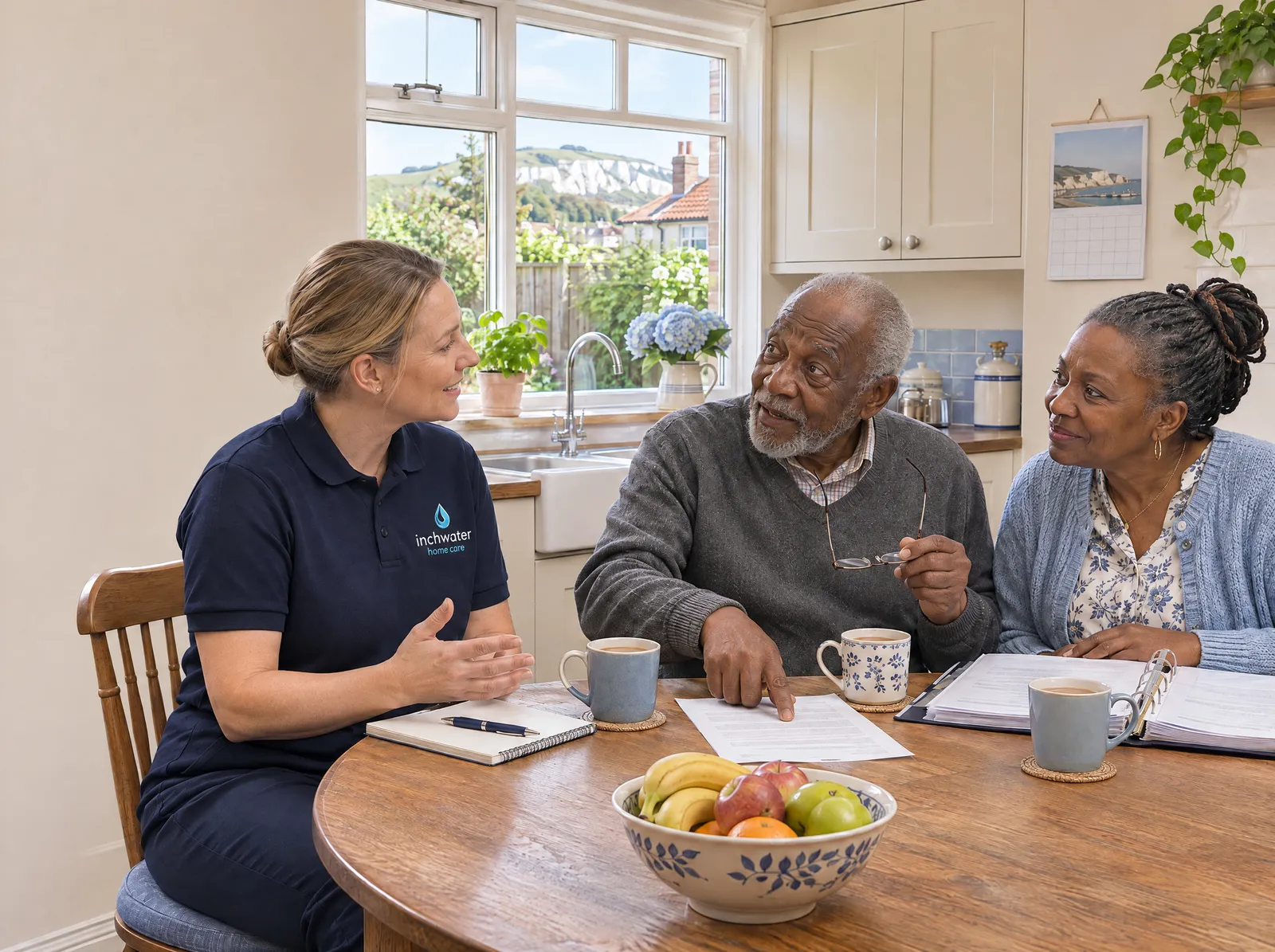
After your free care assessment we give you a clear, personalised quote. It shows the visit times, what happens at each visit and what you will pay, so you can check it against your own budget or talk it over with family before deciding. There is no obligation to go ahead. NHS guidance suggests asking any agency about charges and extras before you sign up, and says people paying for their own care should expect a clear price list and a regular bill. You can read the full checklist on the NHS guide to help at home from a paid care giver.
Visits start at 30 minutes. A morning visit for washing, dressing and breakfast usually needs more time than a lunchtime check with a medication prompt.
One weekly visit for shopping and company is very different from support three or four times a day, every day.
Nights, weekends and bank holidays may be priced differently from weekday daytime visits.
Complex needs, or care that needs two care givers at the same visit, change the amount of care giver time involved.
If you would like a care giver to escort you to appointments, the shops or a favourite café, that time and any driving form part of your quote.
These examples show how different routines add up in care giver hours. Your own pattern is agreed with you at the assessment.
one 2 hour visit a week for cleaning, shopping and a chat. 2 hours a week.
a 30 minute morning visit for breakfast and medication prompts. 3.5 hours a week.
a 1 hour morning visit and a 30 minute evening visit every day. 10.5 hours a week.
four visits a day adding up to 3 hours, every day. 21 hours a week.
We invoice for the care delivered in the previous period, and each invoice lists the visits it covers. The invoice can go to the person receiving care or to a relative who has agreed to manage payments, such as a son or daughter with lasting power of attorney. If Kent County Council or the NHS pays for some of your care, we explain which hours they cover and which, if any, are paid privately.
You may not have to meet the full cost alone. Kent County Council offers a free care needs assessment, and a financial assessment then decides how much you will pay towards care. Attendance Allowance is not means tested and can help towards care costs. Our guides explain each route: paying for your own care, Direct Payments in Kent and NHS Continuing Healthcare. Or start with the fees and funding overview.
Hourly charging means you pay for the care giver time you actually use. A 30 minute medication call and a 2 hour visit for housework and companionship involve very different amounts of time, so pricing by the hour keeps costs fair and easy to check against each invoice.
Yes. Your first assessment at home is free, and so are later reviews of your care plan. A care manager visits, listens to what matters to you and explains the options, with no obligation to arrange care afterwards.
Our shortest visit is 30 minutes. That allows time for personal care, a medication prompt or a meal without rushing, and still leaves room for a proper conversation with your care giver.
Yes. Visits can be increased or reduced as needs change. Tell the office what you would like, and we will update the care plan and confirm the new pattern in writing.
Yes. Relatives can pay for all of the care or top up hours funded by Kent County Council. We will invoice the person who has agreed to pay, as long as the person receiving care is happy with that arrangement.
Families can see visit notes through the Birdie app as part of our service. At your assessment we will explain how access is set up for the people you choose. See how family updates work
This is general information, not financial or legal advice. Last updated 23 October 2026.
Book a free assessment and we will set out your visit pattern and its cost in writing.