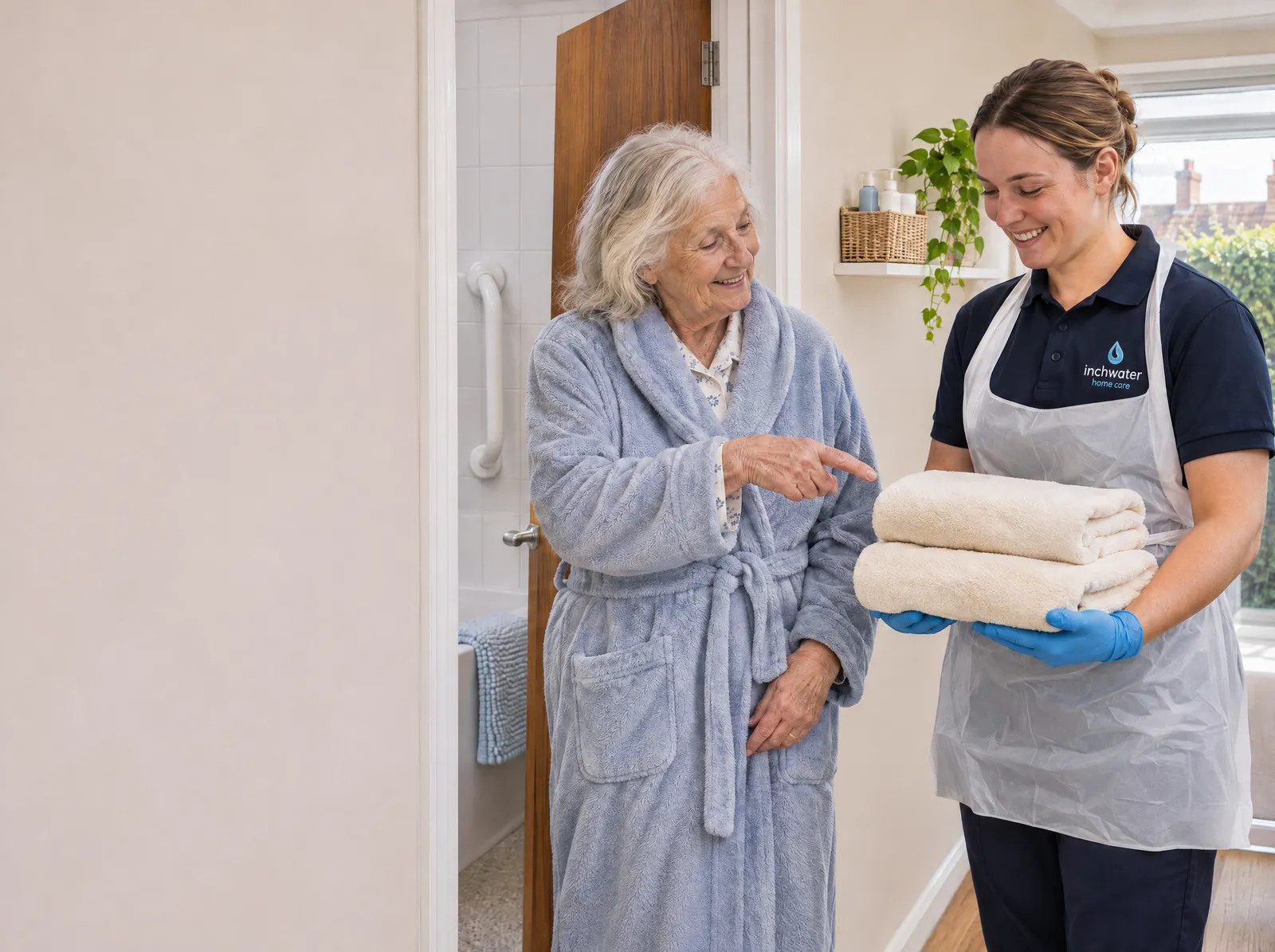
Washing, bathing and showering
- Strip washes, showers or baths, with help in and out
- Hair washing, shaving, oral care and skin care
- Noticing sore or red skin and reporting it

Personal care
Help with washing, dressing, the toilet and medicines is deeply personal. Our care givers give it calmly and respectfully, in the way you choose, so you or your loved one can stay comfortable and confident at home. Inchwater Home Care provides personal care across Dover, Deal, Sandwich, Folkestone, Hythe and nearby villages from our office in Whitfield, Dover.
Care Quality Commission
Rated Outstanding by the CQC
The independent regulator of health and social care in England
Rated Outstanding by the Care Quality Commission
Report published 10 September 2019
Report published 10 September 2019. In July 2023 CQC reviewed the information it holds about us and found no need to reassess our rating.
Read our CQC report (opens the CQC website)Awards
Recognised regionally
homecare.co.uk Top Home Care Providers, South East England
Quick answer
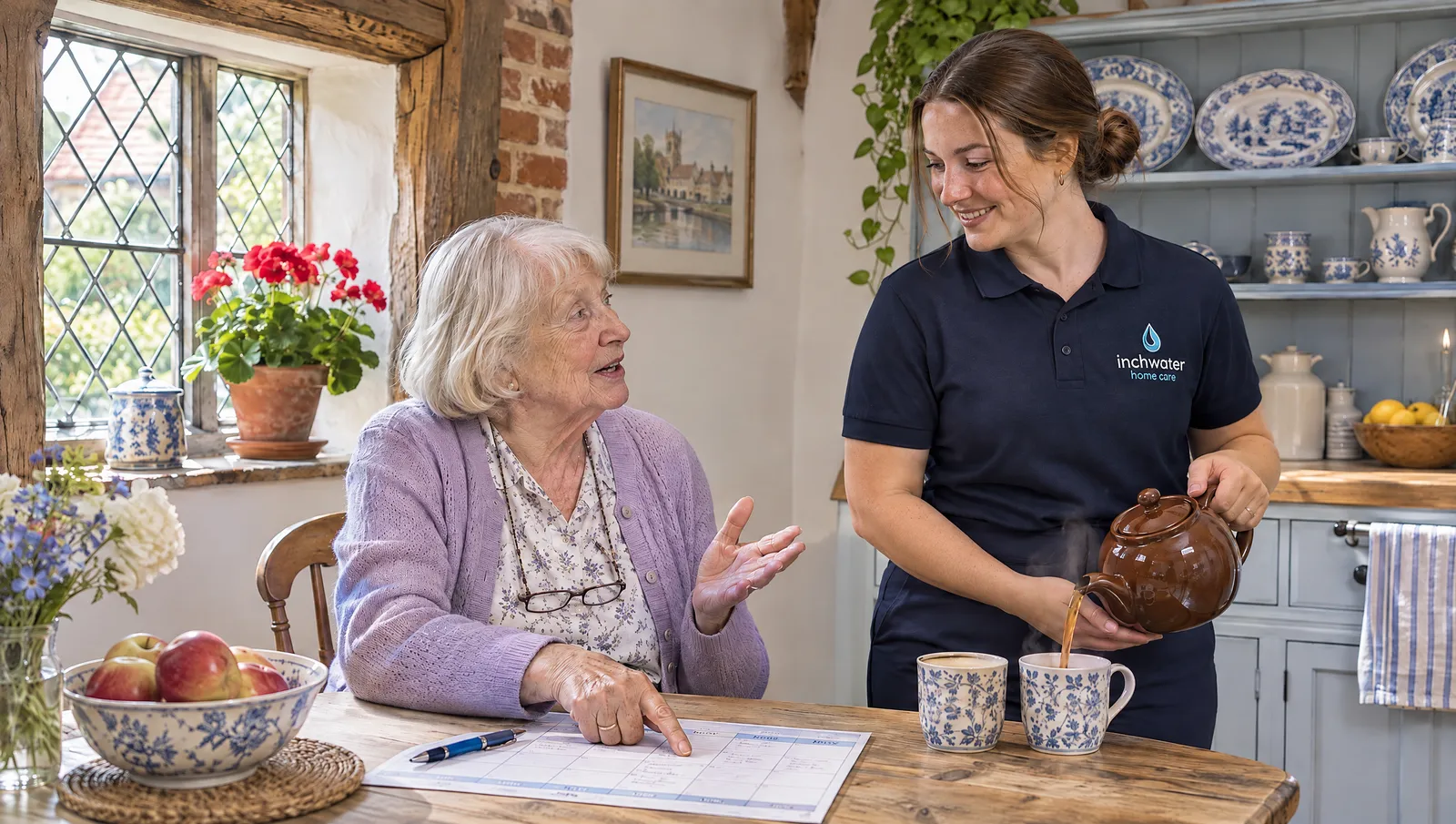
Personal care at home is hands-on help with the tasks that keep you clean, comfortable and well, such as washing, dressing, using the toilet, eating and taking medicines. A trained care giver visits at times agreed with you and supports you to do as much as you can for yourself, in the privacy of your own home.
The NHS guide to help at home from a paid care giver lists washing, dressing, using the toilet and getting up in the morning among the everyday tasks a visiting care giver can help with. Every Inchwater visit lasts at least 30 minutes, so there is time to help properly.
Accepting help with washing or the toilet can feel awkward at first. That is normal, and our care givers understand it. Respect for privacy and independence is also something the Care Quality Commission expects of every registered provider under Regulation 10: dignity and respect.
Care givers close doors and curtains, keep you covered with a towel and explain what they are about to do before they do it.
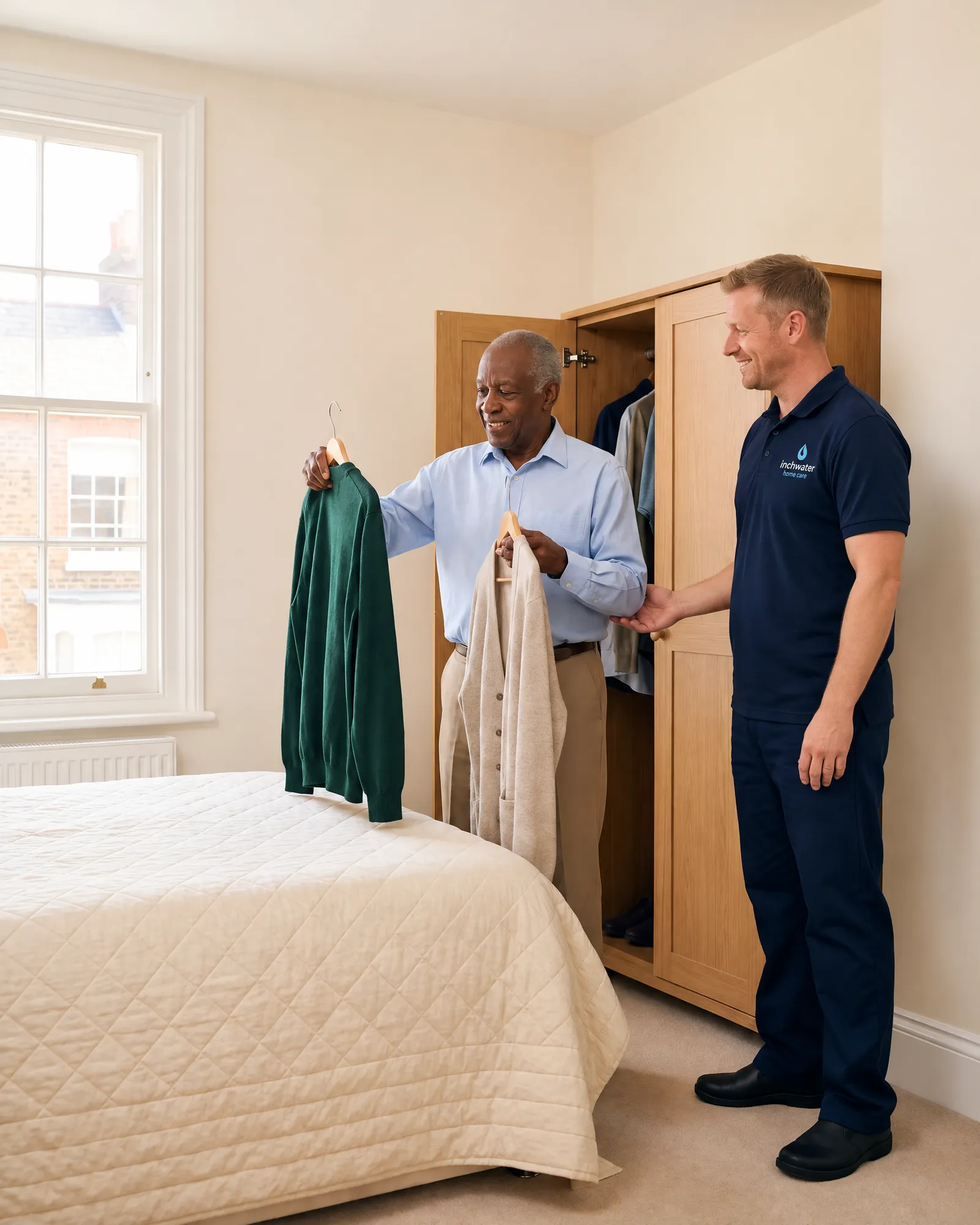
Bath or shower, morning or evening, which jumper today: you decide. Your care plan records your preferences so every care giver follows them.
If you can wash your face or fasten your buttons, you will. Care givers support rather than take over, which helps you keep skills and confidence for longer.
Personal care can be short term or long term, from one visit a day to several.
A care manager visits you at home to talk through what you need, how you like things done and any risks, such as getting in and out of the bath.
We write down your routine and preferences, so the small details that matter to you are not lost.
We introduce a small team of care givers and aim to keep them consistent, so you are not explaining yourself to new faces.
Care givers record every visit electronically. With your agreement, family can read the notes in the Birdie family app.
We review your care regularly and adjust visits as your needs change.
Many people combine personal care with home help for meals, laundry and housework, or with companionship for time to talk and get out. After a hospital stay, personal care is often part of hospital discharge care. We also support people living with dementia and give personal care as part of palliative and end of life care.
We provide personal care in Dover, Deal, Sandwich, Folkestone and Hythe, and in Walmer, Kingsdown, St Margaret's at Cliffe, Capel-le-Ferne, Eastry, Ash, Wingham, Aylesham, Eythorne, Shepherdswell, Adisham, Sandgate, Hawkinge and Newington.
We aim to give you a small, consistent team who get to know you and your routine. Holidays and sickness mean you will sometimes see a different care giver, but your care plan goes with every visit, so they know how you like things done. We will tell you about changes where we can.
Yes. Care givers can remind you when medicines are due and give the help set out in your care plan, recording each visit in your electronic care record. We agree the right level of support at your assessment, and our office can contact your GP on your behalf at no charge.
Many people do at first, and that is completely understandable. Care givers keep you covered, explain each step and only help with what you ask for. You choose how things are done. If you would prefer a male or female care giver, tell us and we will do our best to arrange it.
Yes. Many people have a morning visit to get up, washed and dressed and an evening visit to get ready for bed. Visit times depend on care giver availability in your area, and we agree them with you before care starts.
Each visit lasts at least 30 minutes, which gives time to help properly without rushing. Longer visits are available, and you can have one visit a day or several, depending on what your care plan needs.
Tell us a little about what would help and we will call you to arrange a free care assessment.
Sent securely to our care team
Tell us how you like things done and we will plan help around it.