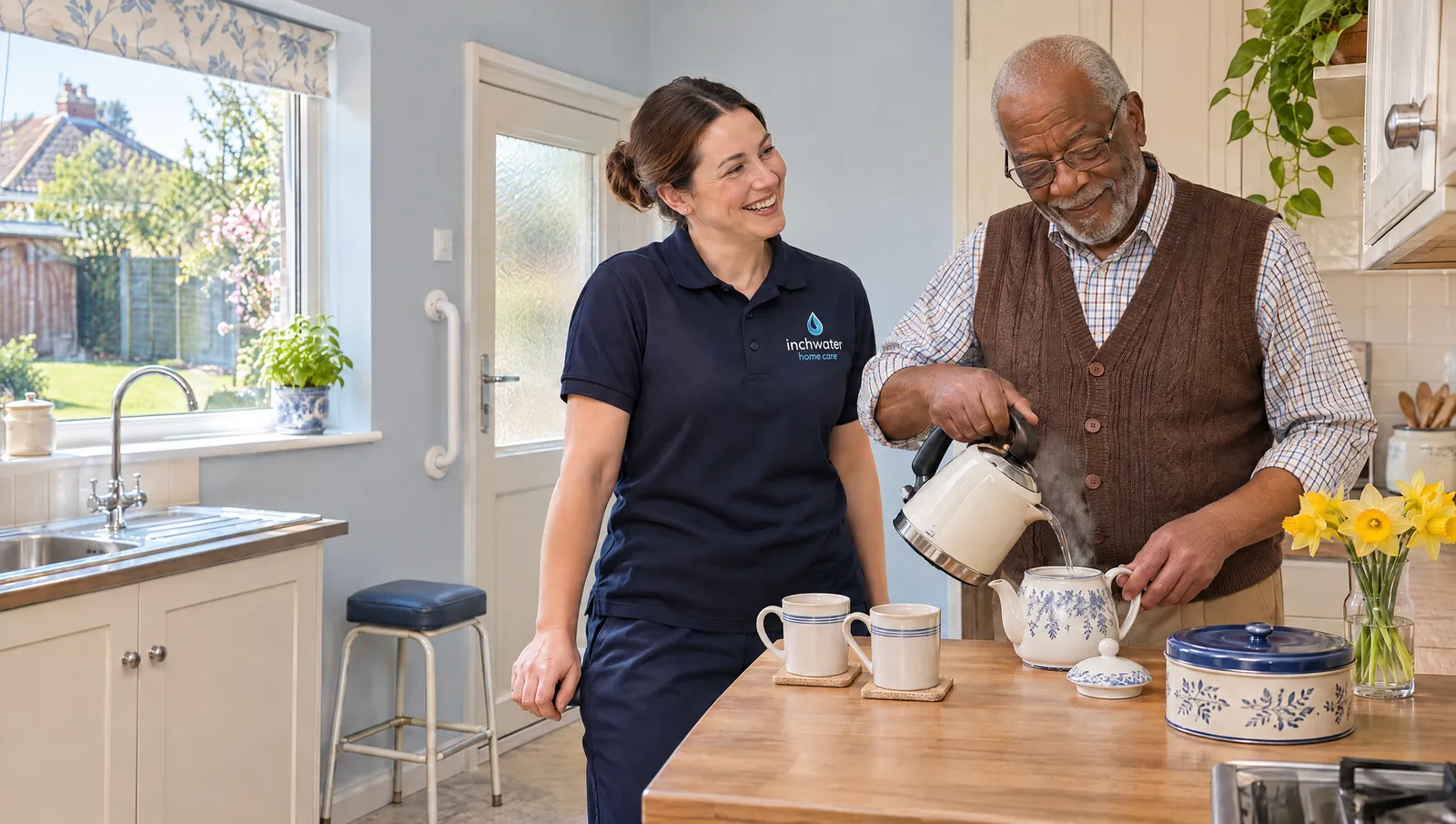
Morning
not being sure whether tablets have been taken or breakfast eaten.

Dementia and Alzheimer's care at home
Home is where the memories, habits and small comforts live. Inchwater Home Care supports people living with dementia and Alzheimer's across Dover, Deal, Sandwich, Folkestone and Hythe, with familiar care givers, calm routines and practical help. Your loved one stays in the place they know, and your family no longer carries everything alone.
Care Quality Commission
Rated Outstanding by the CQC
The independent regulator of health and social care in England
Rated Outstanding by the Care Quality Commission
Report published 10 September 2019
Report published 10 September 2019. In July 2023 CQC reviewed the information it holds about us and found no need to reassess our rating.
Read our CQC report (opens the CQC website)Awards
Recognised regionally
homecare.co.uk Top Home Care Providers, South East England
Quick answer
Yes. Many people living with dementia or Alzheimer's can stay at home with the right support. Familiar rooms, steady routines and care givers they recognise can ease confusion and worry. We plan visits around your loved one's habits and life story, keep the same small team where we can and adapt care as their needs change.
Home care works alongside the GP, the memory service and community nurses. It does not replace medical treatment, but it can help each day feel calmer, safer and more like their own.
The NHS describes dementia as a group of related symptoms linked to an ongoing decline in brain functioning. Alzheimer's disease and vascular dementia make up the majority of cases, and symptoms usually become worse over time. Read the NHS guide to dementia.
Every person's experience is different, but across a day it might look like this:
not being sure whether tablets have been taken or breakfast eaten.
losing interest in food, or finding a familiar task like making tea harder to follow.
feeling restless or unsettled as the light fades.
waking confused about the time or wanting to go out.
That is why we start with the person, not the diagnosis.
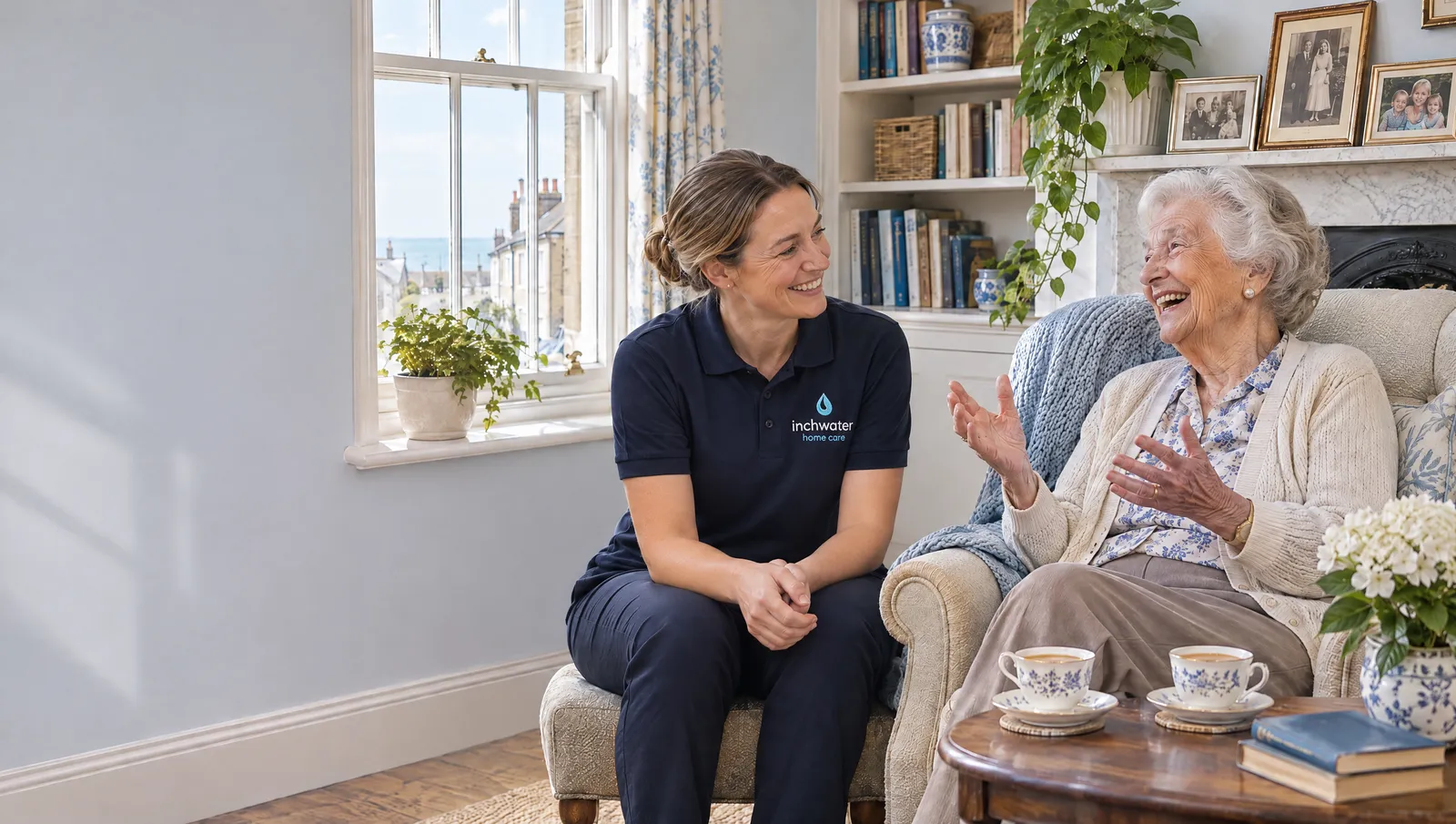
We build visits around routines that already work: the first cup of tea, the favourite chair, the walk to the post box. A predictable day helps reduce anxiety.
We introduce a small, consistent team so your loved one sees care givers they recognise. Any new care giver is introduced properly first.
Care givers speak simply, offer one choice at a time and respond to the feeling behind the words rather than correcting.
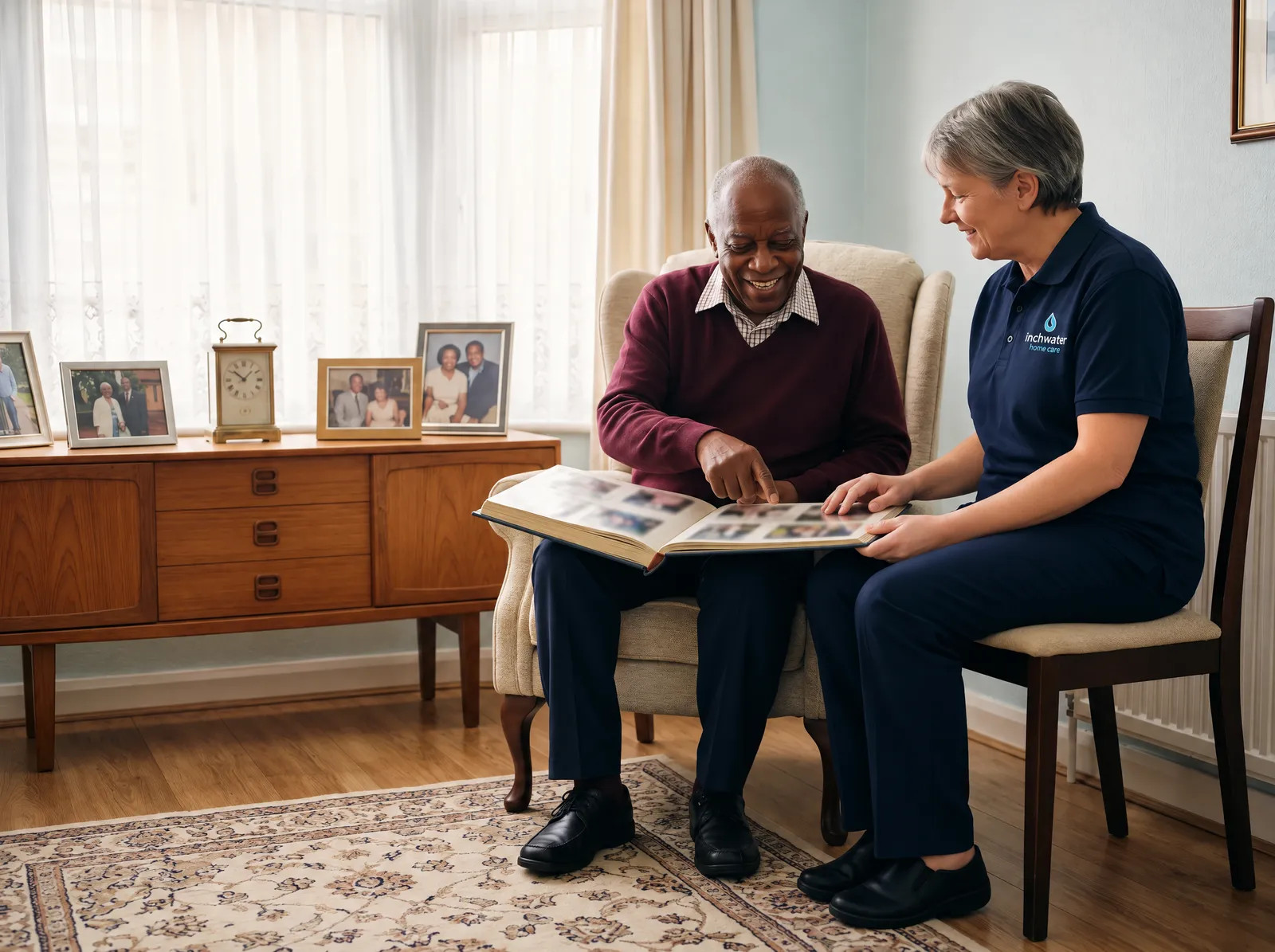
Photo albums, baking, music, gardening or a short outing. We choose activities from your loved one's own life story, not a generic list.
The Alzheimer's Society explains that someone with dementia may not recognise thirst or may forget to drink. Care givers offer drinks often, prepare favourite meals and note what was eaten, so changes are spotted early.
We look for simple ways to reduce risk, such as good lighting and clutter-free walkways, while encouraging your loved one to do what they can for themselves. If new risks appear, we talk with you before anything changes.
Families of people living with Alzheimer's have described our team as knowledgeable and adaptable, and told us they felt like partners in their parent's care rather than onlookers.
Many daughters, sons and partners have been caring alone for a long time before they call us. We treat you as part of the care team. Tell us about your loved one's history, likes and worries, follow visit notes through our family app and call the Whitfield office whenever something changes.
With consent, we share concerns with GPs, community nurses and memory services, and we can contact a GP on your loved one's behalf at no charge.
Support for you matters too. Unpaid care givers can request a carer's assessment from Kent County Council on 03000 41 61 61. The Alzheimer's Society Dementia Support Line on 0333 150 3456 offers advice to families.
Dementia changes over time, so the care plan changes with it. We review care regularly and adjust visit length, timing and tasks with you.
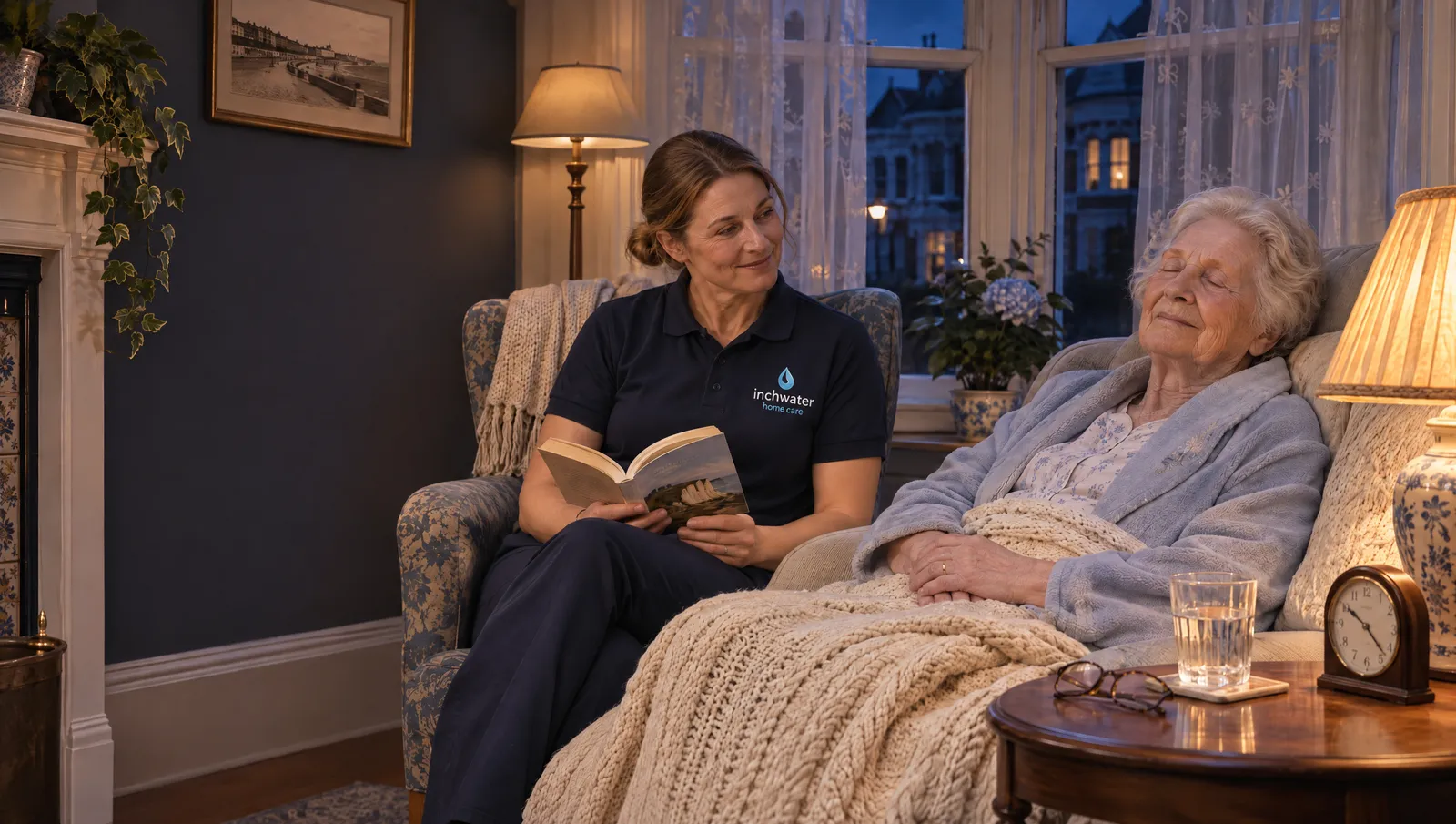
add overnight care, waking or sleeping.
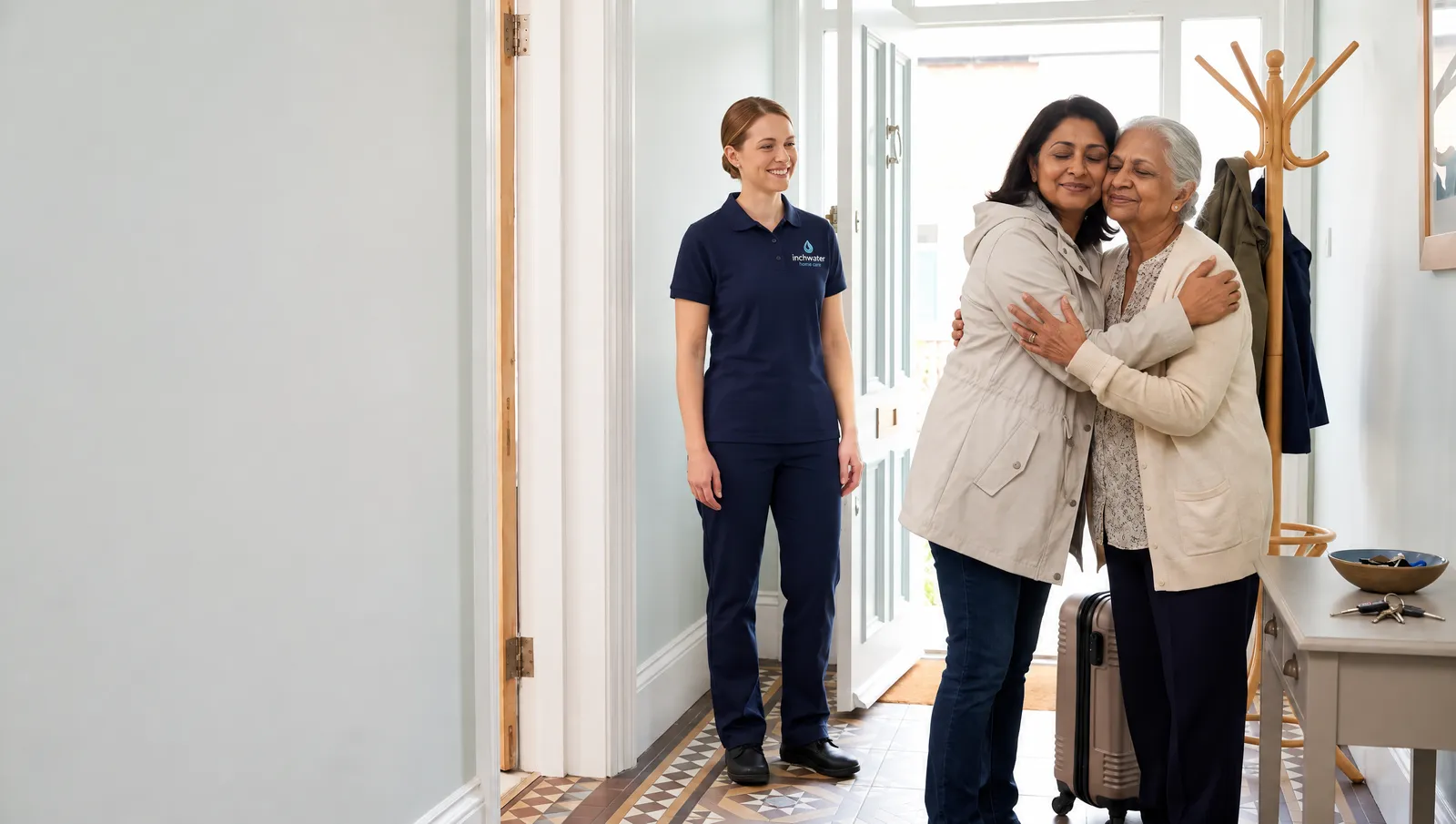
book respite care.
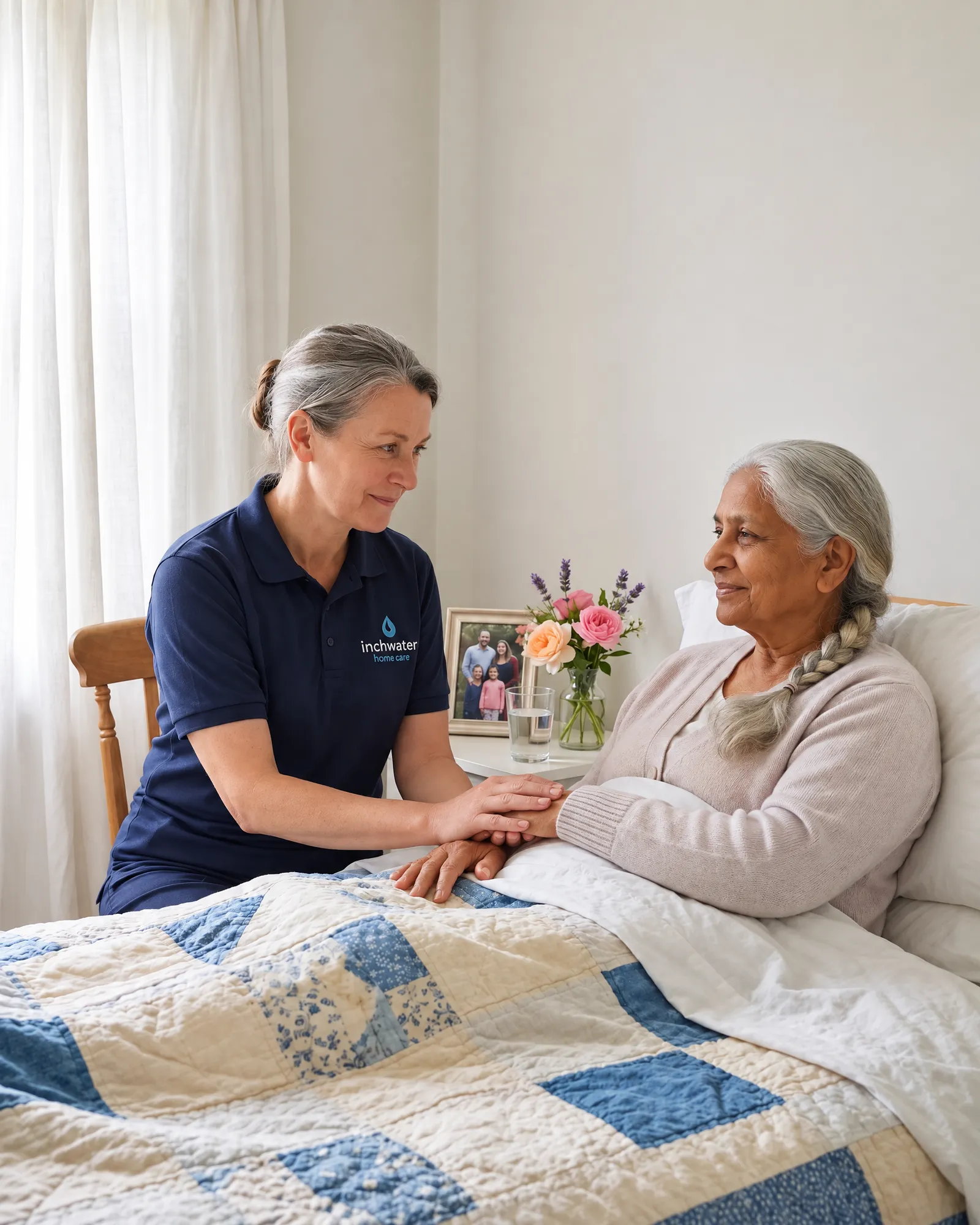
gentle palliative and end of life care at home, alongside the professionals involved.
We aim for a small, consistent team so your mother sees familiar faces. Holidays and sickness mean we cannot promise a named care giver for every visit, but we plan rotas around continuity and introduce any new care giver first.
This is common, and care givers are patient with it. They build trust slowly, follow his lead, try again a little later or approach a task another way. We will ask you what has worked before.
Care givers can support with medication as set out in the care plan and record each dose. The level of support is agreed at the assessment.
We can plan visits for the late afternoon and evening, when many people feel more unsettled. If nights are hard, ask us about waking or sleeping overnight care.
You can read visit notes in the family app, so you see how each visit went. Our Whitfield office team is a phone call away when you want to talk.
Call the office for your area or request a free assessment. A care manager visits, gets to know your loved one and agrees a care plan with you before visits begin.
Tell us a little about what would help and we will call you to arrange a free care assessment.
Sent securely to our care team
A free, no obligation assessment at home is the gentlest way to start.