
Inchwater Home Care home page

Guide: staying well

Staying well in hot weather: heatwave advice for older people

A cool breeze off the Channel can make a summer day feel milder than it is. Indoors, a south facing flat or a sunny conservatory can stay hot well into the night. This guide explains the warning signs to look for, the simple habits that help and where to find trusted advice.

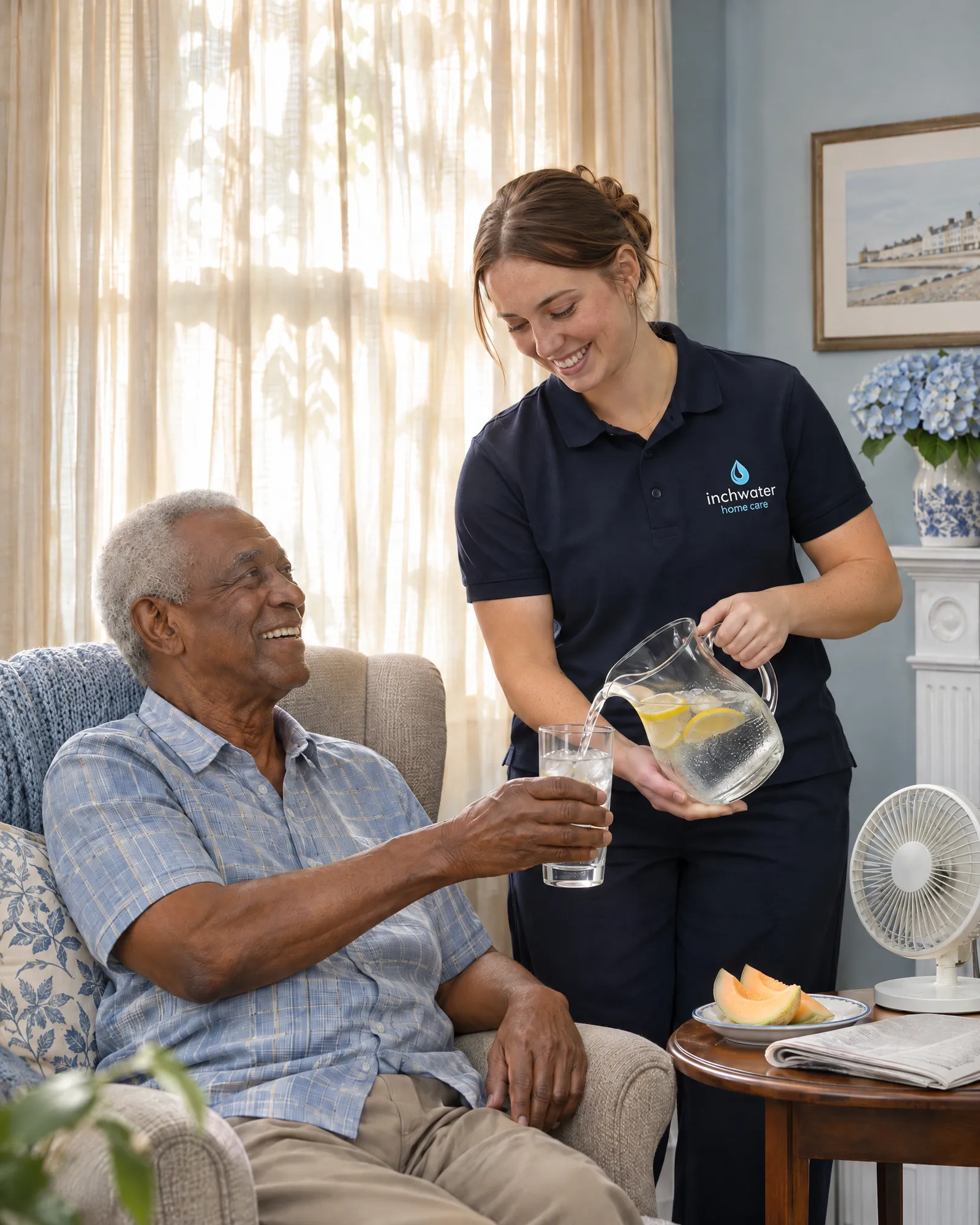
Home care giver pouring iced water for an older man in a shaded Deal sitting room on a hot summer afternoon

Last updated 23 October 2026

Independent evidence you can check

Care Quality Commission

Rated Outstanding by the CQC

The independent regulator of health and social care in England

Rated Outstanding by the Care Quality Commission

Report published 10 September 2019

Report published 10 September 2019. In July 2023 CQC reviewed the information it holds about us and found no need to reassess our rating.

Read our CQC report (opens the CQC website)

Awards

Recognised regionally

homecare.co.uk Top Home Care Providers, South East England

  1. Top 10Home Care Providers, South East England2015
  2. Top 10Home Care Providers, South East England2017
  3. Top 20Home Care Providers, South East England2018

Quick answer

How can older people stay safe in a heatwave?

Keep out of the heat during late morning and early afternoon, close curtains on sunny windows during the day and open windows once it is cooler outside. Sip cold drinks regularly, even without feeling thirsty. Know the signs of heat exhaustion, check whether your medicines raise your risk and make sure someone checks on you each day.

The NHS names people aged 65 and over, people with long term conditions and people taking several medicines among those most at risk. Heat does not have to be extreme to cause harm.

Signs of heat exhaustion and heatstroke

  • Heat exhaustion: what to look for

    The NHS lists these signs:

    • Tiredness, dizziness or a headache
    • Feeling or being sick
    • Heavy sweating, with skin turning pale and clammy
    • Cramps in the arms, legs or stomach
    • A high temperature, strong thirst or irritability
  • What to do straight away

    1. Move the person somewhere cool.
    2. Take off any unnecessary clothing, such as a cardigan or socks.
    3. Give them plenty of water. A sports drink or rehydration sachet can also help.
    4. Cool their skin with cool water and a fan, or a cold pack wrapped in a cloth under the armpits or on the neck.

    Stay with them. They should start to feel better within 30 minutes. Call NHS 111 if you are struggling to treat the symptoms or need advice.

  • Call 999 if you see signs of heatstroke

    Heatstroke is a medical emergency. Call 999 if the person is still unwell after 30 minutes of rest, cooling and fluids, or if they have a very high temperature, hot skin that is not sweating, a fast heartbeat or fast breathing, confusion, a seizure or loss of consciousness. Do not drive them to A&E yourself.

Drinking enough through the day

Many older people feel less thirsty than they used to, so thirst is a late signal. Little and often works better than one large glass. Water, diluted squash, milk, ice lollies and watery fruit such as melon or cucumber all count. The NHS advises avoiding alcohol, caffeine and hot drinks in a heatwave.

Fill a jug each morning and keep it in sight. If it is still full at lunchtime, that is a useful prompt.

Keeping your home cool

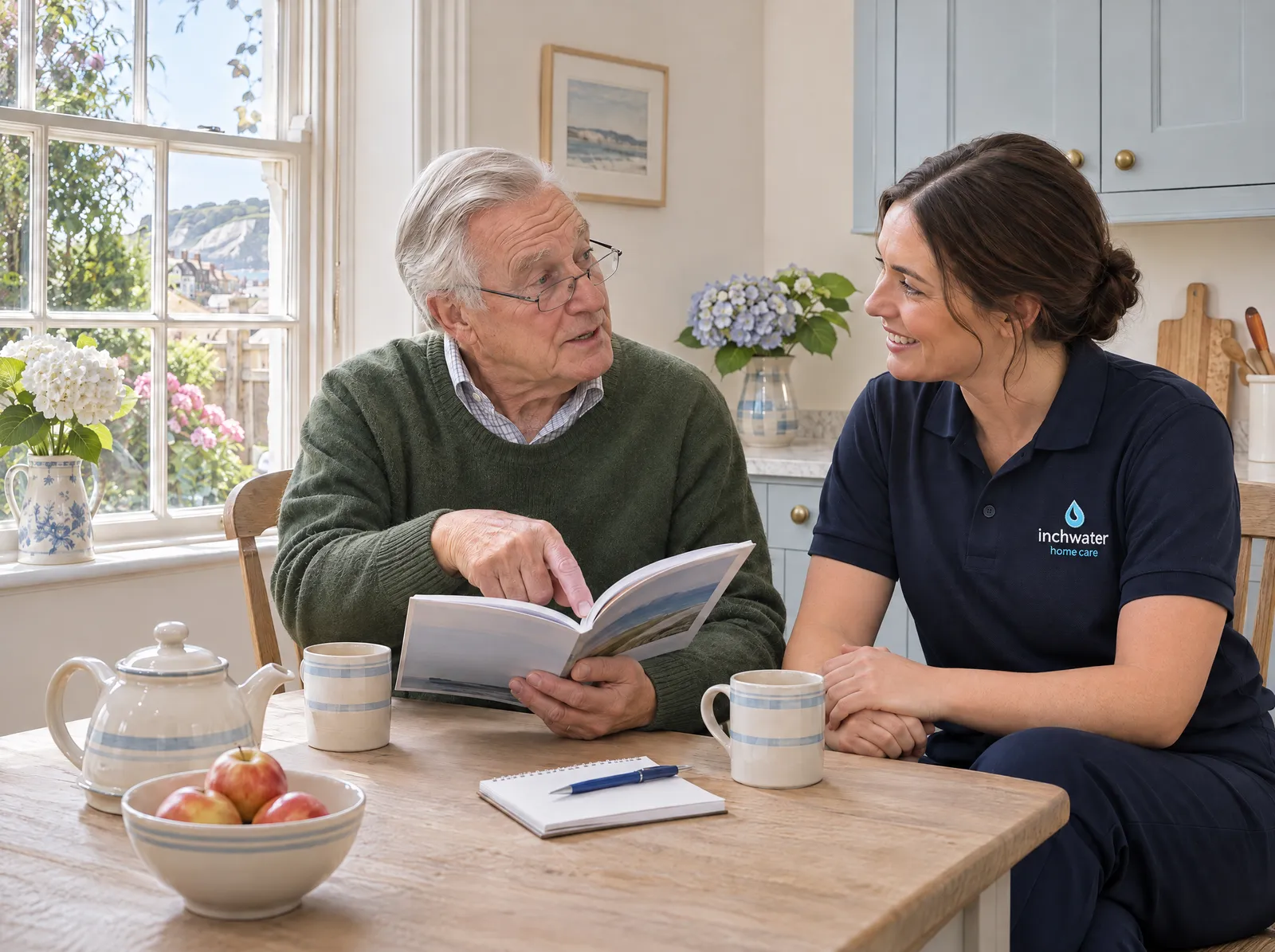
  • Inchwater care giver and an older man reading a care guide together at his kitchen table in a bright Hythe home

    By day

    close curtains and blinds on windows that catch the sun.

  • By night

    open windows once it is cooler outside than in, so fresh air can move through.

  • Choose a cool room

    spend the hottest hours in the coolest room and check where you sleep too.

  • Use fans wisely

    the NHS says electric fans help when the temperature is below 35°C.

  • Cool the skin

    a cool shower, a damp flannel or cool water on your wrists.

  • Dress lightly

    loose cotton or linen in pale colours, with a hat if you go out.

Medicines and hot weather

Some medicines make it harder for the body to manage heat or fluids. The MHRA highlights water tablets (diuretics), some blood pressure and diabetes medicines (including insulin and metformin) and some antipsychotics. Others, including some antibiotics and antidepressants, can make skin burn more easily.

  • Store medicines as the label directs, away from sunny windowsills and hot cars.
  • Keep insulin and other fridge medicines in the fridge.
  • Ask your pharmacist whether any of your medicines raise your risk in the heat.

Never stop or change a medicine without speaking to your GP or pharmacist first.

Checking on neighbours and family

Older people who live alone may not notice they are overheating, or may not want to make a fuss. During hot spells, try to check on relatives, friends and neighbours every day. Ask three simple questions: is the home too hot, are you drinking and how are you feeling? If you live far away, ask a neighbour or friend nearby to pop in.

UKHSA heat-health alerts

The UK Health Security Agency works with the Met Office to issue Heat-Health Alerts for England. The main alert season runs from 1 June to 30 September, with extra alerts if heat arrives outside those dates. You can register on GOV.UK to receive alerts by email.

  • Yellow

    most people are unlikely to be affected, but older people and those with health conditions may struggle.

  • Amber

    the whole population could be at risk.

  • Red

    a significant risk to life, even for healthy people.

Treat any alert as a cue to plan cool, quiet days and step up checks.

How a home care giver can help in hot weather

A regular care giver gets to know what is usual for the person they visit. In hot weather that means closing curtains at the right time, preparing cool meals, refilling drinks and noticing early changes such as drowsiness or confusion. For someone living with dementia, a familiar face can gently prompt drinks that might otherwise be forgotten. If a care giver is worried, they tell the office, who can contact family or the GP.

Local help in East Kent

  • Age UK South Kent Coast

    information, advice and social support from centres in Deal and Folkestone. Visit Age UK South Kent Coast or call 01304 372608.

  • Your local pharmacist

    advice on medicines and hot weather, without an appointment.

  • NHS 111

    urgent medical advice, online or by phone. In an emergency, call 999.

What temperature is too hot for an older person?

There is no single safe figure. Risk depends on health, medicines and how long the heat lasts, and indoor temperatures can stay high overnight. Yellow alerts exist because vulnerable people can be affected before most people notice. Watch for the warning signs and act early.

Are fans safe to use in a heatwave?

Yes, in most cases. The NHS says electric fans help when the temperature is below 35°C. In hotter conditions they work less well, so focus on keeping the room shaded, drinking regularly and cooling the skin with water.

Is it safe to go out on a hot day?

Plan outings for early morning or evening and avoid the hottest part of the day. Stay in the shade, wear a hat and light clothes, take water and tell someone where you are going.

Would a daily visit help this summer?

Inchwater Home Care supports people across Dover, Deal, Sandwich, Folkestone and Hythe with regular visits, cool meals, drinks and good company. Our free care assessment is a relaxed conversation about what would help.