
Safety and quality
How we keep care safe and high quality
Welcoming care givers into your home, or into a parent's home, is a big step. This page shows the everyday systems behind our care: who visits, how care is planned and checked, how we support medicines and what to do if anything ever feels wrong.
Independent evidence you can check
Care Quality Commission
Rated Outstanding by the CQC
The independent regulator of health and social care in England
Rated Outstanding by the Care Quality Commission
Report published 10 September 2019
Report published 10 September 2019. In July 2023 CQC reviewed the information it holds about us and found no need to reassess our rating.
Read our CQC report (opens the CQC website)Awards
Recognised regionally
homecare.co.uk Top Home Care Providers, South East England
- Top 10Home Care Providers, South East England2015
- Top 10Home Care Providers, South East England2017
- Top 20Home Care Providers, South East England2018
Quick answer
How do you make sure care is safe?
Every person we support has a written care plan, a small team of familiar care givers and records completed at each visit. Lead care givers check care in people's homes, care managers review plans as needs change and every concern is recorded and followed up. Families are kept informed with the person's consent.
Our service is regulated by the Care Quality Commission, which rated us Outstanding overall in a report published 10 September 2019. Read our CQC rating
Continuity and matching
Safety starts with knowing someone well. We aim for each person to have a small, consistent group of care givers, matched where we can on location, availability, skills and personality. A care giver who visits often notices the small changes that matter: a meal left untouched, a new cough or a quieter mood than usual. Anyone covering works from the same care plan.
Care plans and reviews
Your care plan is written with you at the free assessment. It sets out each visit's tasks, how you like things done and any risks, such as falls or skin damage, with the steps care givers take to reduce them. Care managers review plans regularly and straight away after a fall, a new diagnosis or a hospital stay. See how care starts or explore hospital discharge care.
Spot checks by our lead care givers
Our lead care givers are experienced care givers who guide and support the wider team. With the client's agreement, they join real visits to check that care matches the care plan.
Step 1: Observe
They watch how care is given, including dignity, safe moving and handling and hand hygiene.
Step 2: Check records
They make sure visit notes and medicine records are complete and accurate.
Step 3: Ask the person
They ask the client, and family if present, how care is going and what could be better.
Step 4: Feed back
Care givers get feedback there and then, and anything needing follow up goes to the care management team.
Medication support
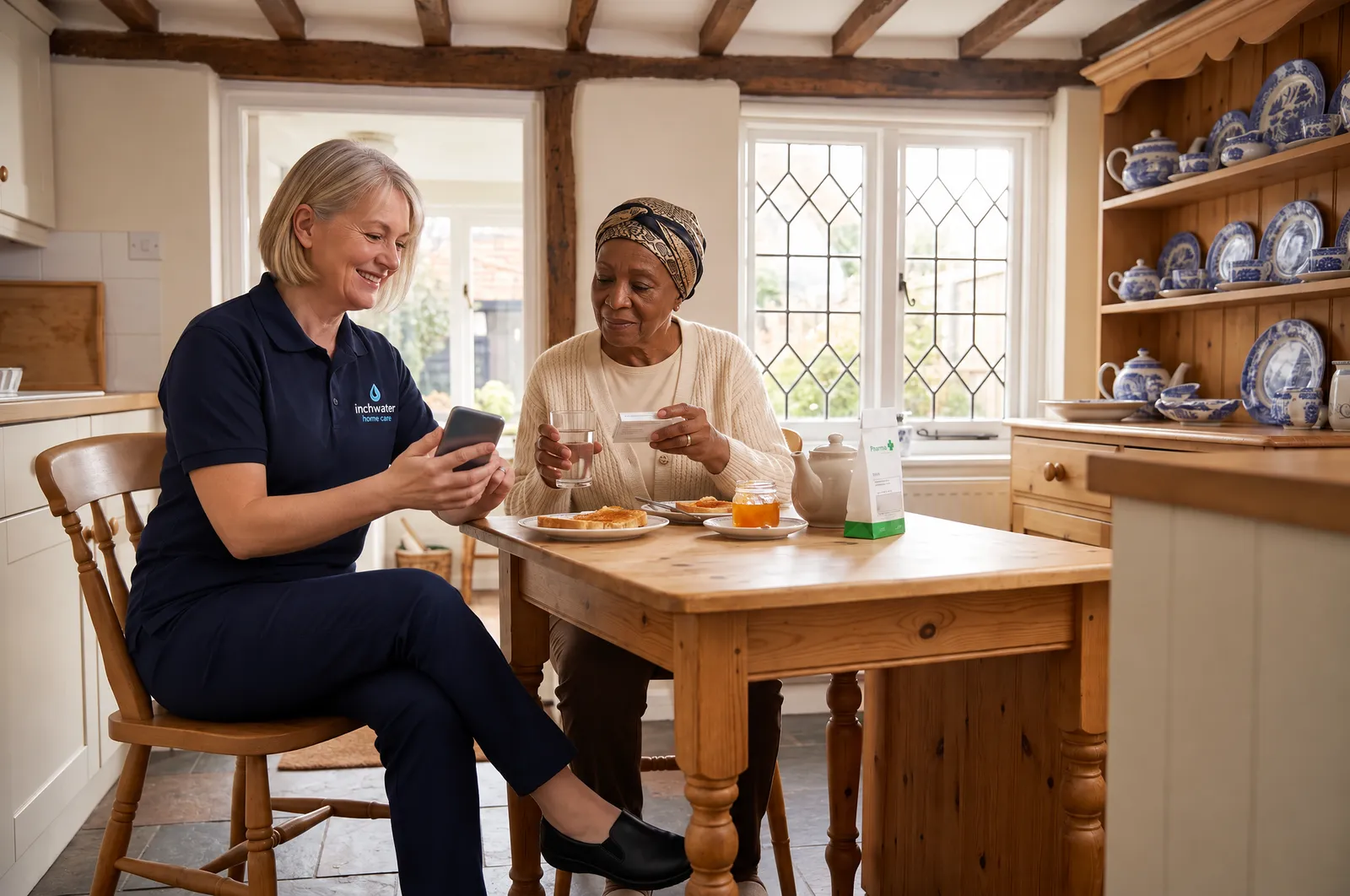
What care givers do with medicines is agreed in the care plan, from a reminder to take tablets to helping someone take them from their packaging. Care givers record each medicine supported at the time, so a missed or refused dose is visible to the office. Care givers are trained before supporting medicines and their practice is checked.
Our approach follows the NICE guideline on medicines support for adults receiving social care in the community (NG67). We can also contact a GP or pharmacy on your behalf at no charge, for example to chase a repeat prescription.
Infection prevention
Care givers clean their hands before and after care and keep bare below the elbows. Gloves and aprons are worn when a task calls for them, such as personal care or continence support, and changed between tasks. We follow current national guidance, including the Department of Health and Social Care resource on infection prevention and control in adult social care settings, and update our practice when it changes.
Safeguarding
Every care giver is trained to recognise signs of abuse, neglect, self-neglect and financial scams, and to report any concern to the office straight away. Care managers follow the Kent and Medway multi-agency safeguarding adults procedures and make a referral to Kent County Council when someone may be at risk. Read our safeguarding approach or read our guide to staying safe from scams.
Electronic care records and the Birdie app
Care givers record each visit on the Birdie app: the care given, medicines supported, food and drink and anything they noticed. Care managers see records as they are completed, so concerns are spotted early. With the person's consent, family members can read visit notes too, which helps when you live some distance away. See how family updates work
Raising concerns and complaints
If something does not feel right, please tell us early. Call the office for your area and ask for a care manager, or mention it to your care giver, who will pass it on. We record every concern, look into it fairly and tell you what we found and what we have changed.
If you are unhappy with our response, the Local Government and Social Care Ombudsman can look at complaints about adult social care, including care that is paid for privately. You can also tell the Care Quality Commission about your experience through its give feedback on care service. Read about compliments and complaints
Questions about safety and quality
Are your care givers checked before they start?
Yes. Before anyone works alone with a person we support, they complete the pre-employment checks required for care work in England, including an enhanced DBS check and references. New care givers then complete an induction and shadow experienced colleagues on real visits before visiting on their own.
Will my relative see the same care givers?
We aim for a small, consistent group of care givers who get to know your relative, their routines and what matters to them. Holidays, sickness and changes to visit times mean it cannot always be the same person, but everyone who visits works from the same care plan.
What happens if a visit is running late?
Our office can see visits as care givers record them, which helps us notice when one is running late. If a delay is likely to affect your relative, we aim to let them or you know and explain what is happening.
Can care givers help with medication?
Yes, in the ways agreed in the care plan. That can range from a simple reminder to helping someone take medicines from their packaging. Care givers are trained before they support medicines, record each one at the time of the visit and follow national good practice guidance.
Will you tell the family if something changes?
With your relative's consent, yes. Care givers report changes to the office, and a care manager will contact the people named in the care plan when something significant happens, such as a fall or a change in health. Family members can also read visit notes in the Birdie app.
Ask us how we would keep your loved one safe
At a free assessment at home, a care manager will talk you through care plans, checks and records in person.