
Out of the blue
a call, letter or visit you were not expecting.

Guide: staying safe at home
Scammers are polite, patient and very good at sounding official. This guide explains the tricks they use most often, how to check that a caller is genuine and exactly who to contact if something feels wrong.
Last updated 23 October 2026
Care Quality Commission
Rated Outstanding by the CQC
The independent regulator of health and social care in England
Rated Outstanding by the Care Quality Commission
Report published 10 September 2019
Report published 10 September 2019. In July 2023 CQC reviewed the information it holds about us and found no need to reassess our rating.
Read our CQC report (opens the CQC website)Awards
Recognised regionally
homecare.co.uk Top Home Care Providers, South East England
Quick answer
Take your time and check before you act. Never share bank details, PINs or passwords with anyone who contacts you out of the blue, and never hand over cash or cards at the door. If a call, text or visitor worries you, end the contact and ring a number you already trust.
Genuine banks, councils, police officers and care providers will never mind you checking. Anyone who rushes you, asks you to keep a secret or becomes cross when you say no is showing you a warning sign.
Scams change all the time, but most use the same pressure points. If you notice one, pause.
a call, letter or visit you were not expecting.
you must act today or something bad will happen.
you are told not to mention it to family or your bank.
cash, gift cards, a bank transfer to a "safe account" or a trip to the cash machine.
Someone offers cheap roof, gutter or garden work, claims to be from the water or energy company or collects for a charity you do not recognise. Keep the door closed or on the chain and ask for ID. A genuine official will wait while you ring their organisation on a number from a bill.
A caller says they are from your bank, the police or a computer company and that your money is at risk. Hang up. To reach your bank safely, dial 159, a free service from Stop Scams UK that connects you to most UK banks and cannot be faked by scammers.
Texts about a missed parcel, an unpaid bill or a bank problem usually contain a link. Do not tap it. Forward the message free to 7726 so your mobile provider can block the sender.
Scam emails can copy real logos perfectly. Be wary of any message asking you to log in, pay urgently or claim a refund. Forward it to [email protected], then delete it.
Anyone visiting from Inchwater Home Care should be easy to recognise and easy to check.
your care plan sets out when visits are due, and we tell you who to expect.
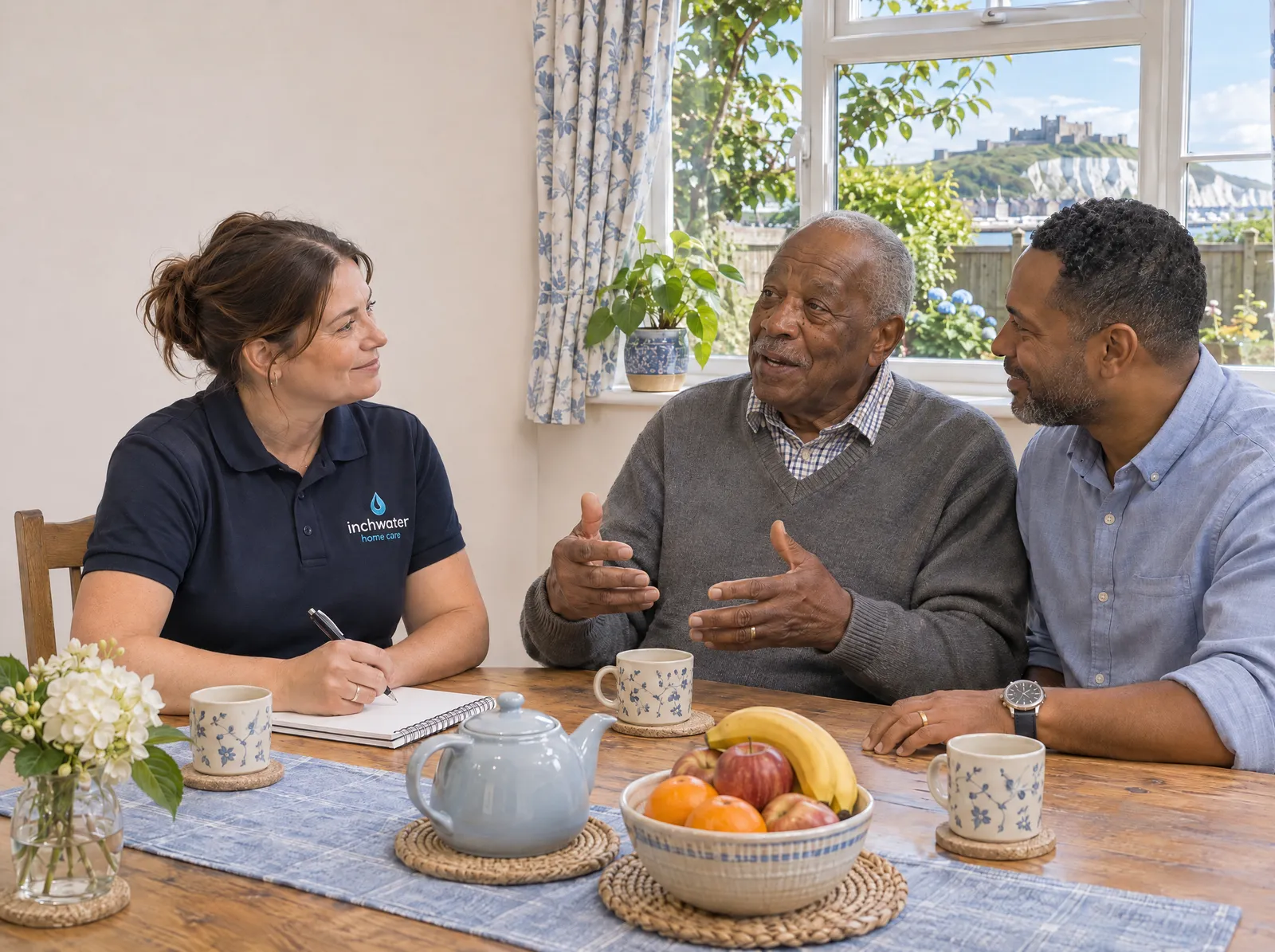
our care givers wear a navy polo shirt with the Inchwater Home Care logo.
care givers carry an Inchwater ID badge that you are welcome to ask to see.
our staff will never ask for your PIN, online banking details or cash at the door.
If you are unsure about anyone who says they are from us, keep the door closed and ring the office. Dover, Deal and Sandwich: 01304 241684. Folkestone and Hythe: 01303 847397. We would always rather you checked.
End the call, close the door or ignore the message. It is not rude to protect yourself.
straight away if you have shared details or paid money. Dial 159 or use the number on the back of your card.
online or on 0300 123 2040. Report Fraud is the national service run by City of London Police. It replaced Action Fraud in December 2025.
from the Citizens Advice consumer helpline on 0808 223 1133, Monday to Friday, 9am to 5pm. This is also how you report a scam or rogue trader to Kent Trading Standards.
If a doorstep caller will not leave or you feel unsafe, call 999. For anything suspicious that is not an emergency, call Kent Police on 101.
Being scammed is never a sign of foolishness. Talking about it helps protect the next person.
Kent County Council's Trading Standards team keeps a page on common scams in Kent, including doorstep criminals who pose as police or Trading Standards officers.
If you need work done on your home, Kent Police suggests choosing a trader from the Kent Trading Standards approved trader scheme run with Checkatrade, and getting every quote in writing.
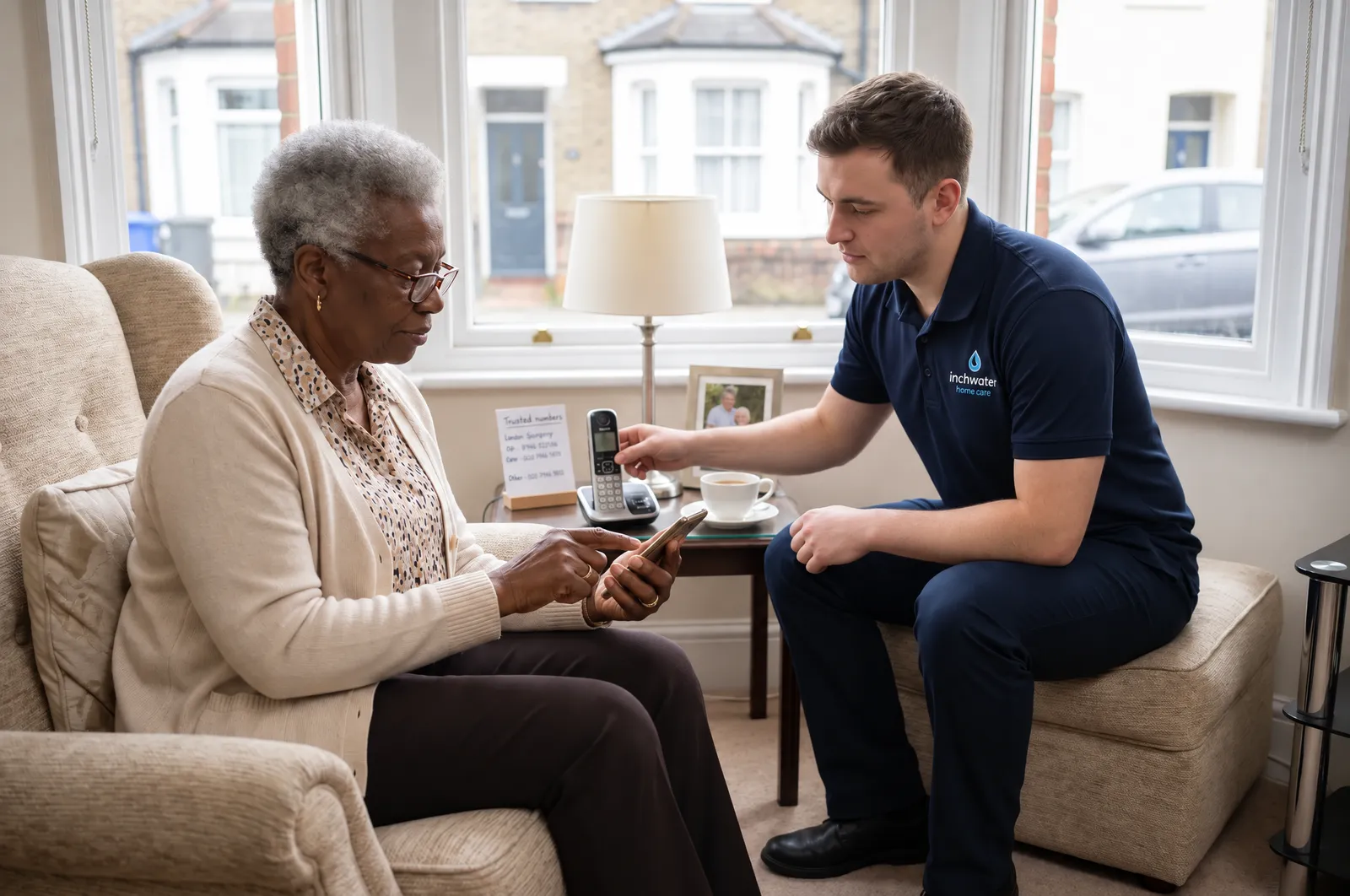
Talk about scams in an everyday way, without blame. Keep a short list of trusted numbers by the phone: the bank, a family member and the care office. Ask the phone provider about call blocking, and register free with the Telephone Preference Service to cut down sales calls.
Look out for changes such as piles of prize draw letters, new "friends" asking for money, unexpected parcels or sudden worry about bills. Our care givers spend regular time with the people we support. If a care giver notices something that concerns them, they tell the office so we can talk it through with you and, where needed, follow our safeguarding procedures.
Loneliness can make a friendly scammer harder to resist. Regular visits bring company and a familiar face. Explore companionship visits.
Not until you have checked. Ask to see ID, close the door and ring the council on a number you look up yourself, not one the caller gives you. Kent County Council warns that criminals sometimes pose as officials, including Trading Standards officers. A genuine visitor will wait or rearrange.
Contact their bank immediately using 159 or the number on their card, then report it to Report Fraud on 0300 123 2040. Keep any letters, texts or receipts as evidence. Above all, reassure your parent that it is not their fault, so they feel able to tell you if it happens again.
Care givers often see changes first, such as unusual post, new visitors or worry about money. Our care givers pass any concern to the office, and we follow local safeguarding procedures with Kent County Council where needed. You can always raise a worry with the office yourself.
Our care givers bring company, a second pair of eyes and a link to a local office team who know your loved one.